"Why does Grandma tell you not to eat fried food when you have a sore throat? It's not just calories; it's about 'Qi'."
TCM Balance At a Glance
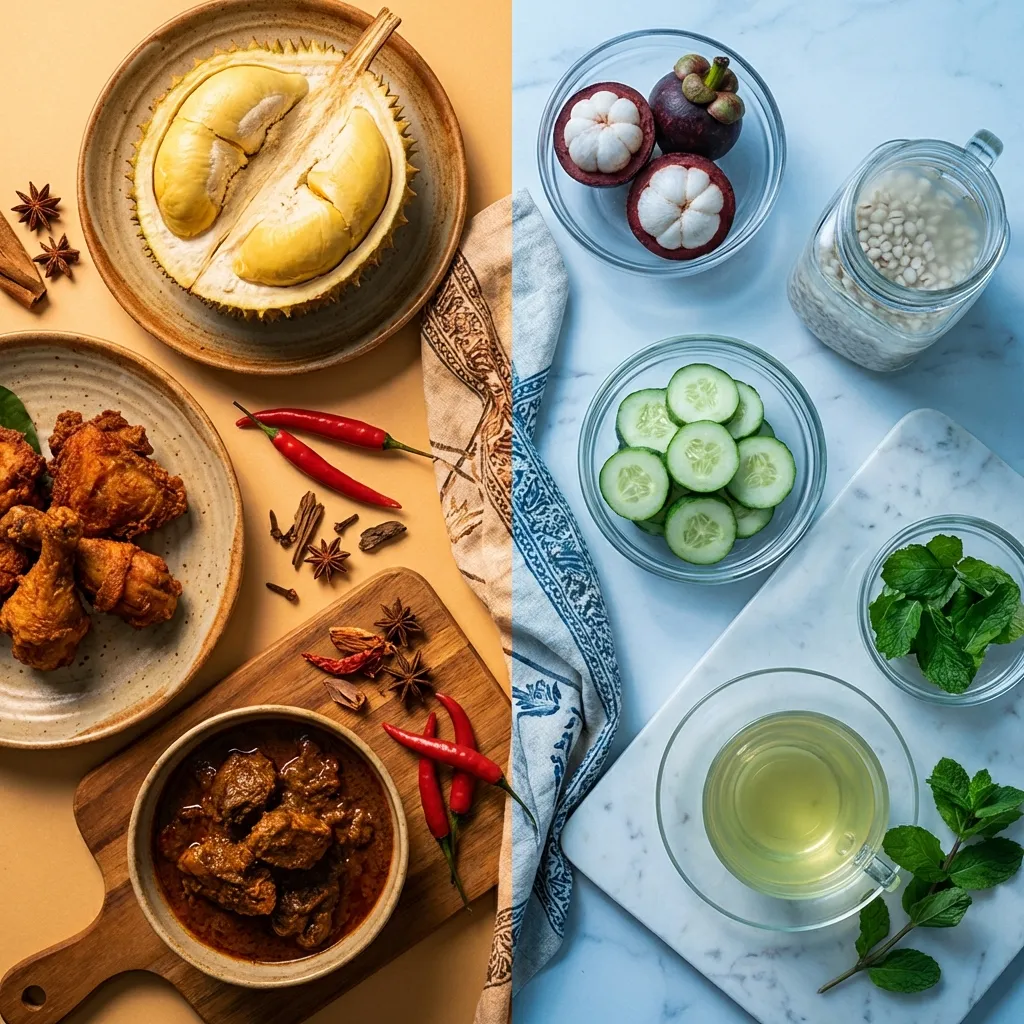
- Heaty (Yang): Fried foods, spicy dishes, durian, red meat, alcohol
- Cooling (Yin): Watermelon, barley water, cucumber, chrysanthemum tea
- Neutral: Rice, pork, most fish, eggs, carrots, cabbage
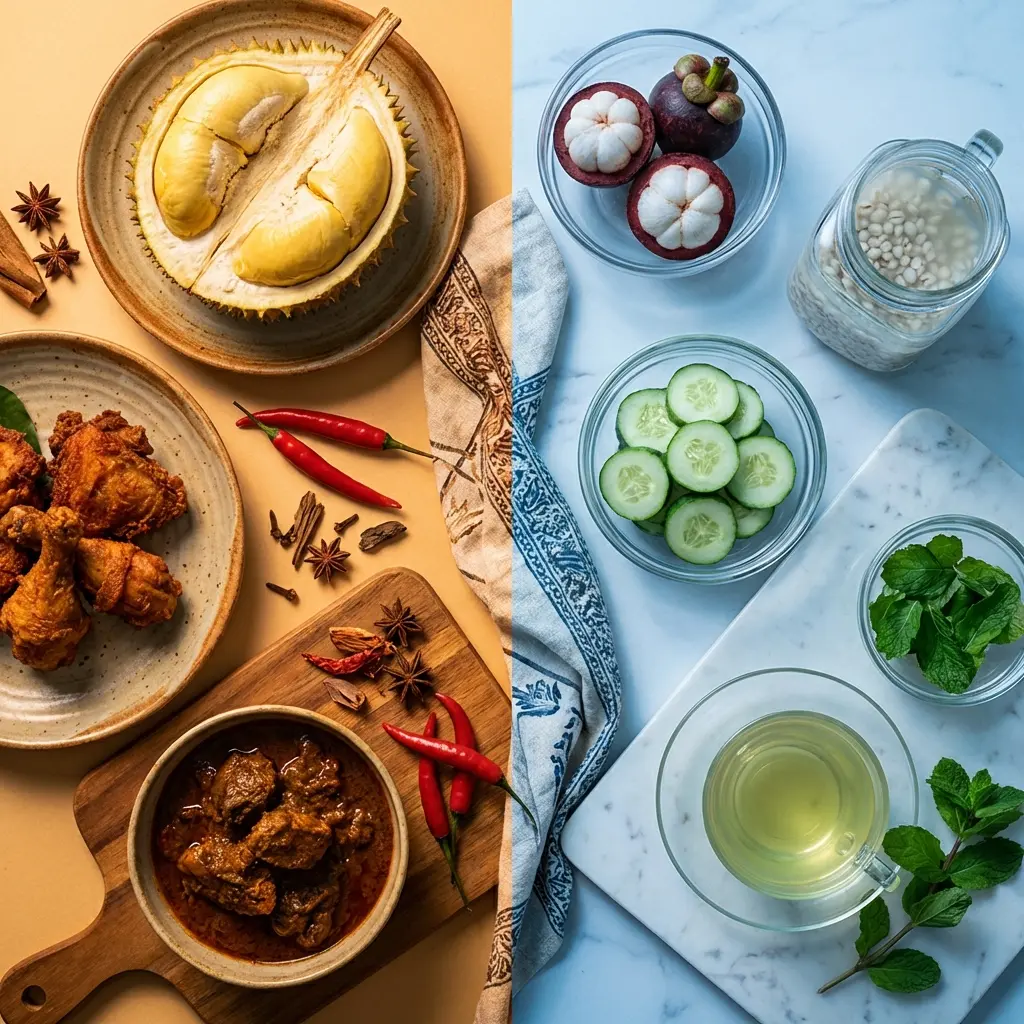
- Balance heaty foods with cooling drinks (durian + mangosteen)
- Cooking method matters: fried = heaty, steamed = neutral, raw = cooling
Heaty vs Cooling Foods Quick Reference
| Category | Heaty (Yang) | Neutral | Cooling (Yin) |
|---|---|---|---|
| Fruits | Durian, Lychee, Mango | Papaya, Grapes | Watermelon, Mangosteen, Pear |
| Meat | Lamb, Beef | Pork, Chicken | Duck, Rabbit |
| Seafood | Prawns, Crab | Most fish | Clams, Oysters |
| Vegetables | Garlic, Onion, Ginger | Carrot, Potato, Cabbage | Cucumber, Bitter gourd, Lettuce |
| Drinks | Coffee, Alcohol | Plain water | Chrysanthemum tea, Barley water, Coconut water |
| Cooking | Deep-fried, Roasted | Steamed, Boiled | Raw, Chilled |
This is a simplified guide. Individual responses vary, and some foods may affect people differently.
A Framework Older Than Science
Every Singaporean child learns certain truths early: don't sit on the floor or you'll catch a cold, drinking cold water after exercise is bad for you, and eating too much fried food will give you a sore throat. These aren't random superstitions—they're expressions of a food philosophy that has guided Chinese eating for thousands of years.
"My grandmother never went to medical school, but she diagnosed my ailments better than any clinic. 'Too heaty,' she'd say, looking at my pimples, and she'd be right. Her prescription? Barley water. It always worked."
Traditional Chinese Medicine (TCM) views food not just as nutrition but as medicine—substances that affect the body's internal balance. Every food has a 'thermal nature' that either warms, cools, or maintains the body's equilibrium. This isn't about physical temperature but about how foods affect your body's internal environment.
In Singapore, this ancient wisdom collides with tropical climate, diverse cuisines, and modern lifestyles. The result is a unique food culture where durian comes with mangosteen, chicken rice comes with barley water, and every grandmother has opinions about what you should and shouldn't eat.
Yin and Yang: The Foundation
At the heart of TCM lies the concept of Yin and Yang—complementary forces that must remain in balance for optimal health. Yang represents heat, activity, and expansion. Yin represents coolness, rest, and contraction.
When Yang dominates, you experience 'heatiness' (热气, rè qì): symptoms like sore throat, acne, mouth ulcers, constipation, irritability, and feeling uncomfortably warm. When Yin dominates, you experience 'cooling' excess: fatigue, pale complexion, cold limbs, loose stools, and general lethargy.
"Balance is everything. Too much of anything—even good things—tips the scales. The goal isn't to avoid heaty foods but to understand when your body needs warming and when it needs cooling."
Your baseline constitutional tendency matters too. Some people run naturally 'hot'—they're the ones who feel warm when others are comfortable, who break out easily, who gravitate toward cold drinks. Others run 'cold'—they always want the air-conditioning turned down, they catch chills easily, they prefer hot soups even in summer.
Climate and season affect this balance too. Singapore's perpetual summer means our bodies work constantly to dispel heat, creating a general tendency toward Yang excess. This is why so many local remedies focus on cooling rather than warming.
Understanding Heaty Foods
Heaty (Yang) foods warm the body, stimulate circulation, and increase metabolic activity. In moderation, they provide energy and invigorate. In excess, they cause the familiar symptoms of heatiness.
Deep-fried foods are classically heaty. The process of frying concentrates energy and transforms ingredients toward the Yang end of the spectrum. Your grandmother's warning about fried food and sore throats has genuine observational backing—many people do experience throat irritation after excessive fried food consumption.
"KFC and mala are the twin demons of heatiness in Singapore. Delicious demons, but demons nonetheless."
Spicy foods, particularly chilli-based dishes, are intensely heaty. Mala hotpot, sambal-heavy dishes, and Thai food with serious heat all push the body toward Yang excess. The sweating, flushing, and racing heart you experience aren't just reactions to capsaicin—TCM would say you're experiencing accelerated Yang.
Red meat, particularly lamb and beef, is considered more heaty than white meat or fish. The richness and blood-building properties of red meat warm the body. Chicken is moderately warm; pork is closer to neutral; duck is considered cooling.
Specific heaty foods include: - Durian (extremely heaty) - Lychee and longan - Mango - Chocolate - Prawns and shellfish - Ginger - Garlic and onions - Coffee and alcohol - Fried noodles and deep-fried anything
Understanding Cooling Foods
Cooling (Yin) foods nourish fluids, calm the system, and reduce inflammation. They counteract heatiness and are especially valuable in Singapore's climate. However, excessive cooling foods can lead to lethargy, weak digestion, and cold-related symptoms.
Water-rich fruits are generally cooling—they hydrate and bring down internal temperature. Watermelon is the archetypal cooling food, and eating it on a hot day feels like liquid relief. Melons, pears, and citrus fruits all lean cooling.
"Watermelon is nature's air conditioning. On a scorching afternoon, nothing resets your body quite like cold watermelon."
Green vegetables, especially those with high water content, tend toward cooling. Cucumber, lettuce, celery, and winter melon all help balance excessive heat. Bitter vegetables like bitter gourd are particularly effective at clearing heat—their unpleasant taste is considered medicinally valuable.
Cooling beverages are a Singaporean institution. Barley water, chrysanthemum tea, winter melon tea, grass jelly drinks, and coconut water all serve to counteract heat. Every hawker centre drink stall knows that these sell best during hot weather or after heavy meals.
Specific cooling foods include: - Watermelon and melons - Mangosteen (the perfect durian accompaniment) - Pears and oranges - Green tea and chrysanthemum tea - Barley water - Coconut water - Cucumber and lettuce - Bitter gourd - Tofu and soy milk - Most seafood (except shellfish) - Duck and rabbit
The Neutral Zone
Between heaty and cooling lies a category of neutral foods that neither warm nor cool significantly. These form the foundation of everyday eating—stable, balanced, and suitable for all constitutions.
Rice, the staple of Singaporean meals, is perfectly neutral. It provides sustenance without tipping the balance in either direction. This neutrality is part of why rice accompanies so many meals—it's the steady base that allows other flavours and thermal natures to play.
"Rice is the mediator at every meal. It doesn't take sides. That's why it goes with everything."
Pork, the most common meat in Chinese cooking, is essentially neutral with a slight warming tendency. Its versatility makes it suitable for endless preparations—from cooling soups to heaty stir-fries—without contributing excessive thermal nature of its own.
Most legumes (except mung beans, which cool) and grains fall in the neutral category. Chickpeas, lentils, bread, pasta, and noodles neither warm nor cool significantly.
Eggs are neutral, making them ideal breakfast food—they provide nutrition without tipping the day's balance early. Fish in general leans neutral to slightly cooling, making it a flexible protein choice.
Carrots, cabbage, and potatoes are all neutral vegetables. They're the supporting cast that fills meals without demanding thermal attention.
The Singaporean Balancing Act
Singaporean food culture has evolved natural pairings that balance thermal natures—wisdom encoded in traditions we follow without always knowing why.
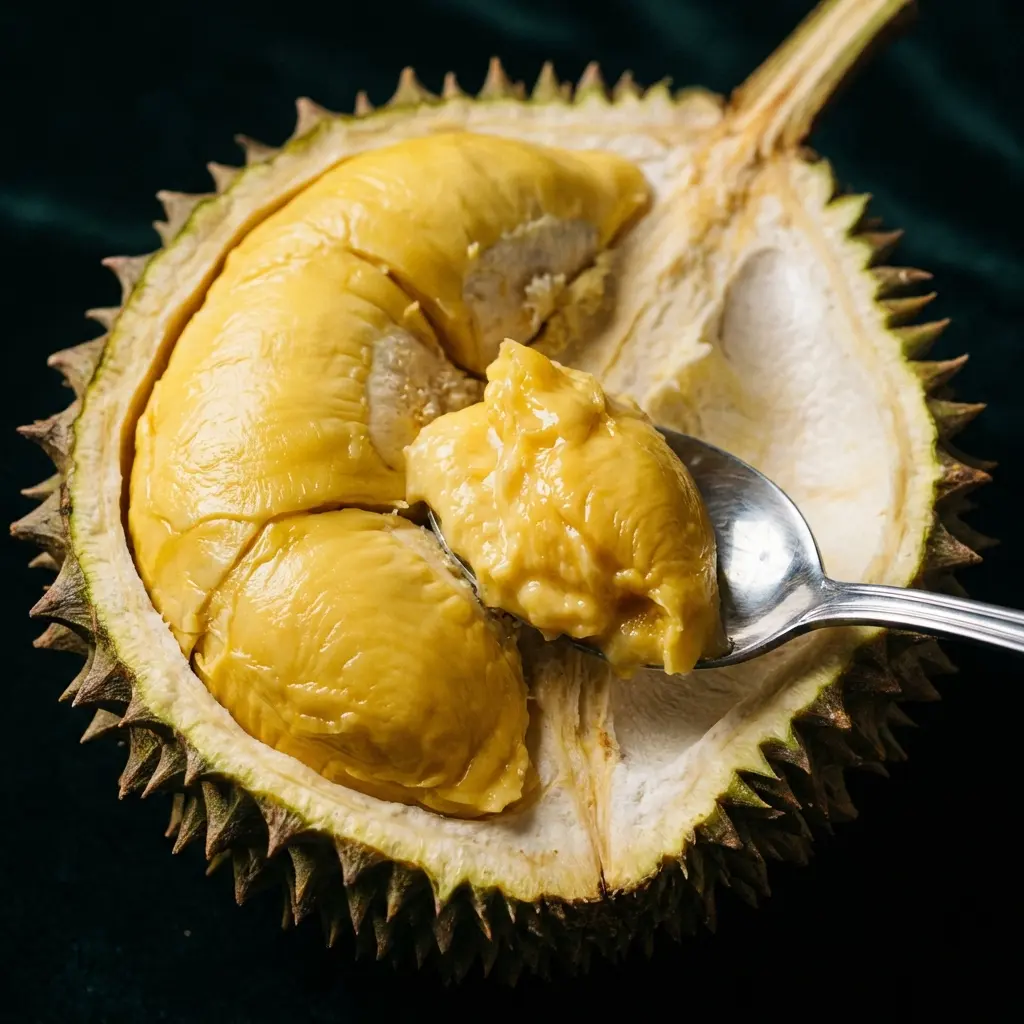
The durian-mangosteen pairing is the most famous example. Durian is extremely heaty—Singapore's favourite fruit is also one of its most thermally aggressive. Mangosteen, called the 'Queen of Fruits,' is intensely cooling. Eating them together lets you enjoy durian while the mangosteen counteracts the excess heat.
"The king and queen of fruits belong together. Durian alone is asking for trouble—durian with mangosteen is asking for balance."
Chicken rice comes with cucumber and cooling soup—not by accident. The poached chicken is mildly warming, the rice neutral, the soup often made with winter melon or watercress (cooling), and the cucumber garnish helps balance the meal.
Barley water's ubiquity in hawker centres reflects its role as a universal counterbalance. After fried carrot cake, char kway teow, or anything from the wok, barley water helps restore equilibrium.
Satay comes with cucumber and onion—the cooling cucumber balances the grilled (heaty) meat. Nasi lemak includes cooling cucumber to offset the richly fried components. Even the sambal's heat is moderated by the coconut milk's milder nature.
Laksa, that heaty bowl of spicy coconut noodles, traditionally ends with a sweet cooling drink. The meal creates heat; the dessert or drink brings balance.
Cooking Methods and Thermal Nature
How you cook affects the thermal nature as much as what you cook. The same ingredient can become more heaty or more cooling depending on preparation.
Frying and roasting add heat. The high temperatures and the addition of oil transform ingredients toward Yang. A piece of tofu, naturally cooling when eaten fresh, becomes less cooling when fried. A chicken steamed is milder than a chicken roasted.
"Fire changes everything. What goes into the wok as neutral comes out as warming. That's the nature of cooking—you're adding Yang energy."
Steaming and boiling are gentler methods that preserve or only slightly shift thermal nature. A steamed fish remains close to its natural (slightly cooling) state. A clear soup maintains the thermal nature of its ingredients without aggressive transformation.
Raw preparation preserves the most original nature. Fresh fruits and vegetables eaten raw express their full thermal character. This is why salads and raw foods feel so cooling—they haven't been transformed by fire.
Grilling and barbecuing concentrate Yang. The direct flame, the charring, and the rendering of fat all push ingredients toward heatiness. Satay, char siew, and BBQ stingray are all heaty partially due to their cooking methods.
Slow braising in liquid is gentler—the ingredients absorb the liquid's nature (often cooling if it's a herbal broth or neutral if plain). This is why herbal soups can be prepared with meats and still end up balanced.
Seasonal and Situational Eating
TCM eating isn't static—it responds to seasons, weather, and personal circumstances. What balances you in January might unbalance you in July. What suits you healthy might be wrong when you're sick.
Singapore's perpetual summer creates a baseline need for cooling foods that would be different in temperate climates. We don't have harsh winters requiring warming foods—our constant heat already pushes us toward Yang excess. This is why cooling drinks and soups are so prevalent in local cuisine.
"In summer, we eat cooling foods. In Singapore, it's always summer. So we always need cooling foods."
Rainy season (monsoon) creates slightly different conditions—more dampness, slightly cooler temperatures. Some adjust their eating during monsoon to include more warming, drying foods. Ginger tea becomes more appropriate; excessive raw foods become less ideal.
Illness requires special attention. When you have a cold with fever (heat), cooling foods and drinks support recovery. When you have a cold with chills (deficient Yang), warming foods like ginger soup help more. When your digestive system is weak, neutral and easily digestible foods allow healing.
Menstruation in TCM terms is a time of blood loss and potential Yang deficiency. Warming foods, particularly during and immediately after, are traditionally recommended. This is why 'red date tea' and ginger-based drinks are associated with women's health.
After exercise, when the body has generated significant heat, immediate consumption of cold foods is cautioned. The body is 'open' and vulnerable to thermal shock. Lukewarm or warm drinks are preferred immediately after, with cooling foods appropriate once the body has settled.
Common Remedies and Applications
Singaporean households have practical remedies for common imbalances. These simple interventions often work, regardless of how you feel about TCM theory.
For sore throat from heatiness: chrysanthemum tea, pear soup, cooling herbal tea, or simply watermelon. Reduce fried foods, reduce spicy foods, and increase fluids. If persistent, see a doctor—but often the throat clears once thermal balance restores.
"When my kids get sore throats, I don't reach for medicine first. I reach for chrysanthemum tea. Half the time, that's all they needed."
For acne flare-ups: reduce heaty foods (chocolate, fried foods, spicy foods, shellfish), increase cooling vegetables and fruits, drink more cooling herbal teas. Many people find that dietary adjustment meaningfully affects their skin.
For fatigue and feeling cold: reduce raw foods and cooling drinks, add warming soups with ginger, choose roasted and fried preparations over steamed and raw, have warming breakfast like congee instead of cold cereal.
For digestive discomfort: return to neutral foods, eat warm (temperature) foods, avoid raw vegetables temporarily, drink ginger tea or warm water. The digestive system in TCM is easily affected by thermal extremes.
For mouth ulcers: this is a classic sign of heat. Watermelon, coconut water, chrysanthemum tea, and avoiding spicy and fried foods help many people. Some swear by applying salt directly—painful but effective.
For general wellness maintenance: eat diverse foods across the thermal spectrum, don't overdo any extreme, pay attention to your body's signals, and adjust as needed. Balance isn't achieved once—it's continuously negotiated.
The Practical Singaporean Approach
You don't need to become a TCM practitioner to benefit from this framework. The practical Singaporean approach is simpler: notice how foods affect you, apply common-sense balance, and don't overthink it.
Most Singaporeans don't calculate thermal values—they just know. Eating a lot of fried food? Better have some cooling drink. Feeling cold and tired? Have some hot soup with ginger. Coming down with something? Eat light, eat neutral, drink warm. This intuitive application works.
"I don't know the science. I just know that when I eat too much mala, I get pimples. When I drink barley water, I feel better. That's enough for me."
The goal isn't perfect thermal calculation but reasonable awareness. When your body feels off, consider what you've been eating. When planning meals, include some variety rather than all heaty or all cooling. When indulging, balance with counterpoints.
Skepticism is fine—but don't dismiss observed patterns. Whether TCM theory is 'correct' matters less than whether the practical applications help. If you find that eating more cooling foods reduces your acne, the underlying theory is less important than the result.
Modern life complicates traditional patterns. Air conditioning means we're often cold when we should be warm. Late nights disrupt natural rhythms. Stress generates heat that food alone can't balance. TCM eating is one tool among many—useful but not complete.
The Singaporean wisdom is ultimately practical: eat well, notice how you feel, adjust accordingly, and don't ignore what grandmothers have been telling us for generations. They might not have had scientific terminology, but they had something equally valuable—countless observations of how food actually affects people.