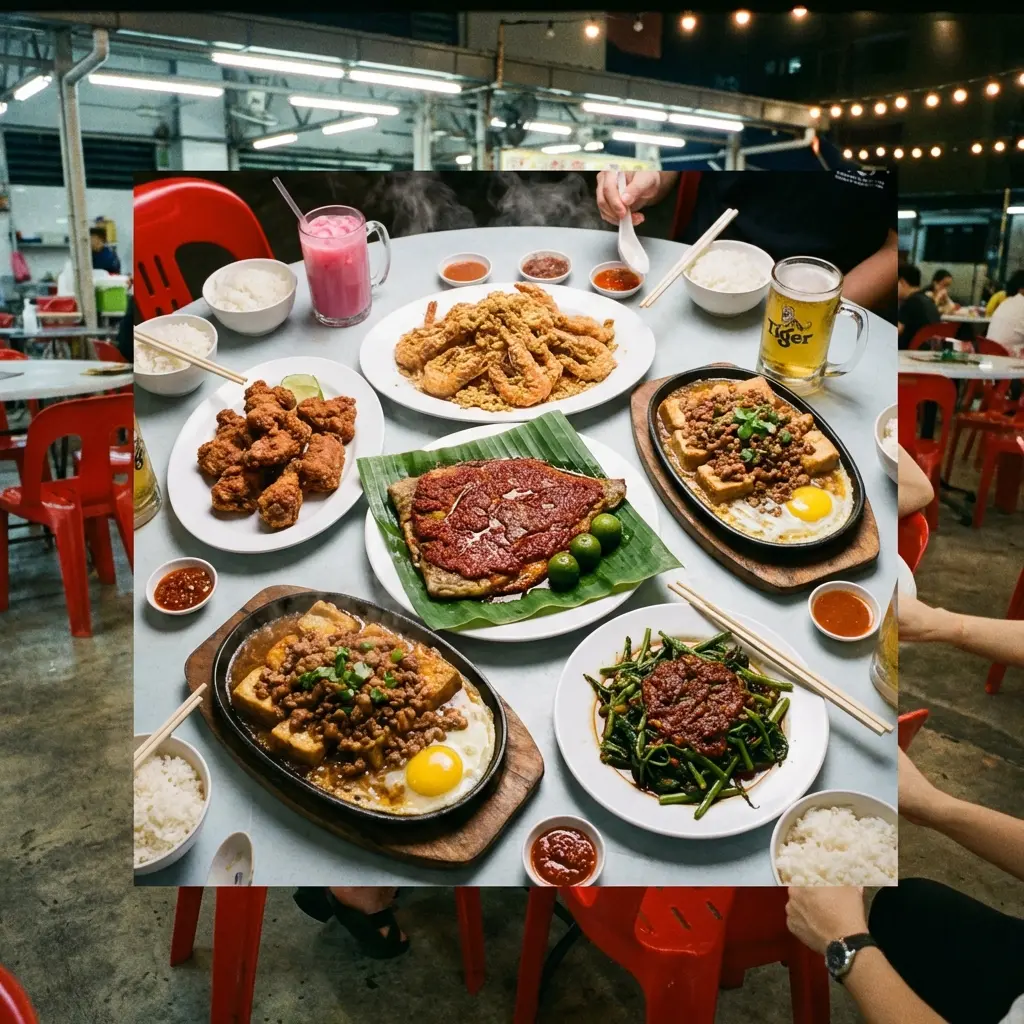
"Zi Char (Cook and Fry) is the perfect communal dining experience. But ordering for a group is a high-pressure strategic exercise. Here is the formula."
Zi Char Ordering Cheat Sheet
- 1 Use the N+1 rule: For N people, order N+1 dishes (plus rice)
- 2 Cover all categories: 1 carb + 1 seafood + 1 meat + 1 tofu/egg + 1 vegetable
- 3 Balance flavours: Mix crispy, saucy, spicy, and mild dishes
- 4 Ask 'Uncle, today what fish is fresh?' for best recommendations
- 5 Must-orders: Har cheong gai, cereal prawns, sambal kangkong
The Art of Communal Dining
Zi char—literally 'cook and fry' in Hokkien—represents Singapore's most democratic dining experience. There's no individual ordering here, no safe retreat into personal preferences. Instead, there's a shared table of dishes, a group of hungry people, and someone who must decide what everyone eats.
That someone, tonight, is you.
"Ordering zi char for a group is like conducting an orchestra. Every dish must play its part—the crispy, the saucy, the spicy, the mild—and together they must create harmony."
The pressure is real. Order poorly, and you'll face a table of disappointed faces, overlapping flavours, and the quiet judgment of those who know better. Order well, and you become the hero—the one who understood that we needed that plate of sambal kangkong, that the cereal prawns would pair perfectly with the white rice, that exactly six dishes was the right number for five people.
This guide will teach you the formula, but remember: zi char is ultimately about the experience of eating together. A technically perfect order that ignores your tablemates' preferences is worse than an imperfect order made with care.
The Golden Formula: N+1
The foundation of zi char ordering is the N+1 rule: for N people, order N+1 dishes (excluding rice or carbs). This ensures enough variety and quantity without overwhelming waste.
For 4 people: 5 dishes For 6 people: 7 dishes For 8 people: 9 dishes
"My father taught me N+1 before he taught me algebra. 'In life,' he said, 'always order one more dish than you think you need. Someone will be hungrier than expected.'"
This rule has exceptions. If everyone at the table is a small eater—perhaps a group of aunties who came more to talk than to eat—N dishes may suffice. If the table includes teenage boys or anyone who's been exercising, consider N+2.
The formula also assumes standard portion sizes. If you're at a particularly generous stall, or if you've ordered the large portions of everything, adjust accordingly. The goal is satisfaction without significant leftovers—though in Singaporean culture, a little leftover signals that the host ordered abundantly.
The Mandatory Categories
A well-ordered zi char meal hits every essential category. Miss one, and the meal feels incomplete. Include them all, and the table achieves a satisfying balance of flavours, textures, and food groups.
The Carb anchors the meal. Options include fried rice, hor fun (flat rice noodles), bee hoon (rice vermicelli), or simply steamed white rice. White rice is the safe choice—neutral and able to absorb sauces from other dishes. Fried rice or noodles are more assertive and should be considered when the table is carb-hungry.
"White rice is the silent hero of every zi char meal. It carries the sauces, cools the spice, and fills the spaces between bites."
The Fish or Seafood provides the meal's centerpiece and often its most expensive element. Steamed fish is traditional but pricey—a whole sea bass or grouper can cost $30-60. More economical options include cereal prawns, sambal stingray, or sweet and sour fish. For larger groups, consider two seafood dishes.
The Meat brings heartiness and typically comes in fried or braised form. Classics include har cheong gai (prawn paste chicken), coffee pork ribs, sweet and sour pork, and kung pao chicken. These dishes are crowd-pleasers with strong flavours.
The Egg or Tofu adds protein variety with a lighter touch. Hotplate tofu arrives sizzling and dramatic. Fu yong omelette (egg with prawns or crab) is fluffy and mild. Steamed egg is silky comfort. These dishes provide a break from heavier meat and seafood.
The Vegetable completes the nutritional picture and provides textural contrast. Sambal kangkong brings spicy crunch. Garlic kailan offers bitter-sweet notes. Stir-fried bean sprouts are simple and refreshing. Never skip the vegetables—they make the meal feel complete.
Building Flavour Balance
Beyond categories, consider how flavours interact across the table. A balanced zi char order includes variety in taste profiles, cooking methods, and textures.
Avoid duplicating dominant flavours. If you're ordering sambal stingray (spicy), don't also order sambal kangkong (also spicy). If the fish is steamed (light, soy-based), balance it with something fried or heavily sauced.
"The worst zi char order I ever witnessed: sweet and sour pork, sweet and sour fish, and honey chicken. Three shades of the same sweetness. The table was miserable by dish two."
Consider the spice spectrum. Every table needs at least one spicy element for those who crave heat, but not so much that sensitive palates have nothing to eat. A good ratio is one clearly spicy dish for every three or four total dishes.
Texture matters enormously. Include something crispy (fried chicken, deep-fried tofu), something saucy (braised pork, curry), and something fresh (vegetables, steamed fish). This variety keeps each bite interesting and prevents palate fatigue.
Balance wet and dry dishes. Too many saucy dishes leave everything swimming together on the plate. Too many dry dishes make you reach constantly for water. Aim for roughly half and half, with the dry dishes providing crunch contrast.
Understanding Portion Sizes
Zi char stalls typically offer dishes in Small (S), Medium (M), and Large (L). Getting the sizes right is crucial—over-ordering wastes food and money, while under-ordering leaves people hungry.
The general guide: Small: 2-3 people Medium: 4-6 people Large: 7-10 people
"'Don't be a hero,' my aunt always says when I reach for the large. 'You're not feeding an army.' She's usually right. Medium is the workhorse size."
But these are rough estimates. A small vegetable dish serves differently than a small meat dish. Vegetables are light—people eat more. Meat is heavy—people eat less. Seafood falls in between.
Ask the stall helper. 'Auntie, medium enough for five people or not?' They've been portioning for years and know exactly how much Singaporeans actually eat. Their answer is more reliable than any formula.
Price scales with size, but not proportionally. A medium is typically 1.5x the price of a small, while large is about 2x. This means medium often represents the best value for groups of four to six.
The Ordering Conversation
How you interact with the stall matters almost as much as what you order. The right approach gets you better food and better service.
Start with respect. 'Uncle' or 'Auntie' regardless of actual age. A smile. Not barking orders, but asking: 'Today what fish is fresh?' or 'What do you recommend for five people?' This signals that you value their expertise and opens the door to genuine help.
"The uncle behind the wok knows things no menu can tell you. The pomfret is exceptionally good today. The pork is a bit tough this batch. He'll tell you—if you ask."
State your constraints upfront. 'We have one person who can't eat shellfish' or 'Not too spicy, please—got kids' helps the stall tailor recommendations. They want you to enjoy the food—it's in their interest to match dishes to your group.
Be decisive but open. 'We want the har cheong gai, definitely. For vegetables, what's good?' shows you have preferences while inviting input. This collaborative approach usually yields better results than rigid ordering or completely deferring.
Confirm the order before they leave. Repeat back: 'So that's har cheong gai medium, sambal kangkong small, steamed fish...' Mistakes happen in busy kitchens. Confirmation prevents disappointment.
The Waiting Game
You've ordered. Now comes the wait—and the chaotic arrival of dishes that defines the zi char experience.
Zi char kitchens work with constrained space and equipment. Multiple orders fire simultaneously. Dishes emerge when they're ready, not in any logical sequence. Your vegetables might arrive first and your rice last. This is normal.
"The person who waits for all dishes to arrive before eating is the person who eats cold food. At a zi char table, you eat what lands in front of you, when it lands."
Eat dishes as they come. The hotplate tofu is best sizzling. The fried chicken is best crispy. Waiting for everything to arrive means eating inferior versions of excellent dishes. Share immediately, taste together, and let the next dish be a pleasant interruption.
Manage the rice situation. If rice arrives last (common), make sure at least a small amount comes early. Eating saucy dishes without rice to absorb them is wasteful and awkward. A polite 'Uncle, can rice come first?' during ordering usually works.
Don't panic if dishes are slow. Peak dinner hours mean longer waits. Twenty minutes for a full order is reasonable; thirty isn't unusual. If something seems forgotten, a gentle inquiry helps: 'Uncle, the fish coming?' is fine. Aggressive demands are not.
Reading the Table
Great zi char ordering doesn't end when the food arrives. Watching how your tablemates eat helps you order better next time—and might prompt a mid-meal addition.
Notice what disappears first. If the cereal prawns vanish while the sweet and sour pork sits untouched, your group prefers crispy to saucy. Note this for future orders. The patterns reveal preferences that people might not articulate.
"Every zi char meal is research for the next one. The dish that gets finished first? Order that again. The dish no one touches? Strike it from the list."
Watch for reaching patterns. Are people constantly reaching for the vegetables? You might have under-ordered greens. Is everyone fighting over the last piece of fish? Next time, consider a larger size or two seafood dishes.
Balance your own eating. As the orderer, you might feel pressure to let others eat first or take less. Don't martyr yourself—but do ensure everyone gets fair access to the popular dishes. Guide the table if needed: 'Eh, everyone try the fish already? Very fresh today.'
At the end, assess honestly. Was there too much food? Too little? Were there dishes no one touched? Zi char ordering improves with reflection. The masters aren't born—they're made through years of tables, mistakes, and learning.
Special Situations
Not every zi char meal follows the standard playbook. Here's how to handle common variations.
For couples or small groups of two to three, the N+1 formula still works but choose dishes carefully. With only three dishes, you need one clear protein (maybe har cheong gai), one seafood or lighter dish (steamed fish or tofu), and one vegetable. Portions should all be small. The meal will feel intimate rather than abundant—and that's fine.
"When it's just the two of us, we order small everything and eat until we're satisfied, not stuffed. Zi char doesn't have to be a feast. Sometimes it's just dinner."
For dietary restrictions, communicate clearly. 'No pork' or 'vegetarian' is understood. Most zi char stalls can accommodate allergies with notice—shellfish-free, no groundnuts. Cross-contamination is harder to control in busy kitchens, so severe allergies require extra care.
For business dinners, err on the side of abundance. Under-ordering at a business meal looks cheap. Order one extra dish beyond what you'd normally choose. Include something premium—a whole fish, perhaps—to signal generosity. Let guests order if appropriate.
For family gatherings with elderly members, consider textures. Crispy fried items might be difficult. Steamed dishes, braised meats, and soft tofu are more accessible. Don't skip the indulgent dishes entirely—grandparents enjoy treats too—but balance for everyone's comfort.
The Essential Dishes
Some dishes define the zi char experience. Master these, and you'll never order poorly.
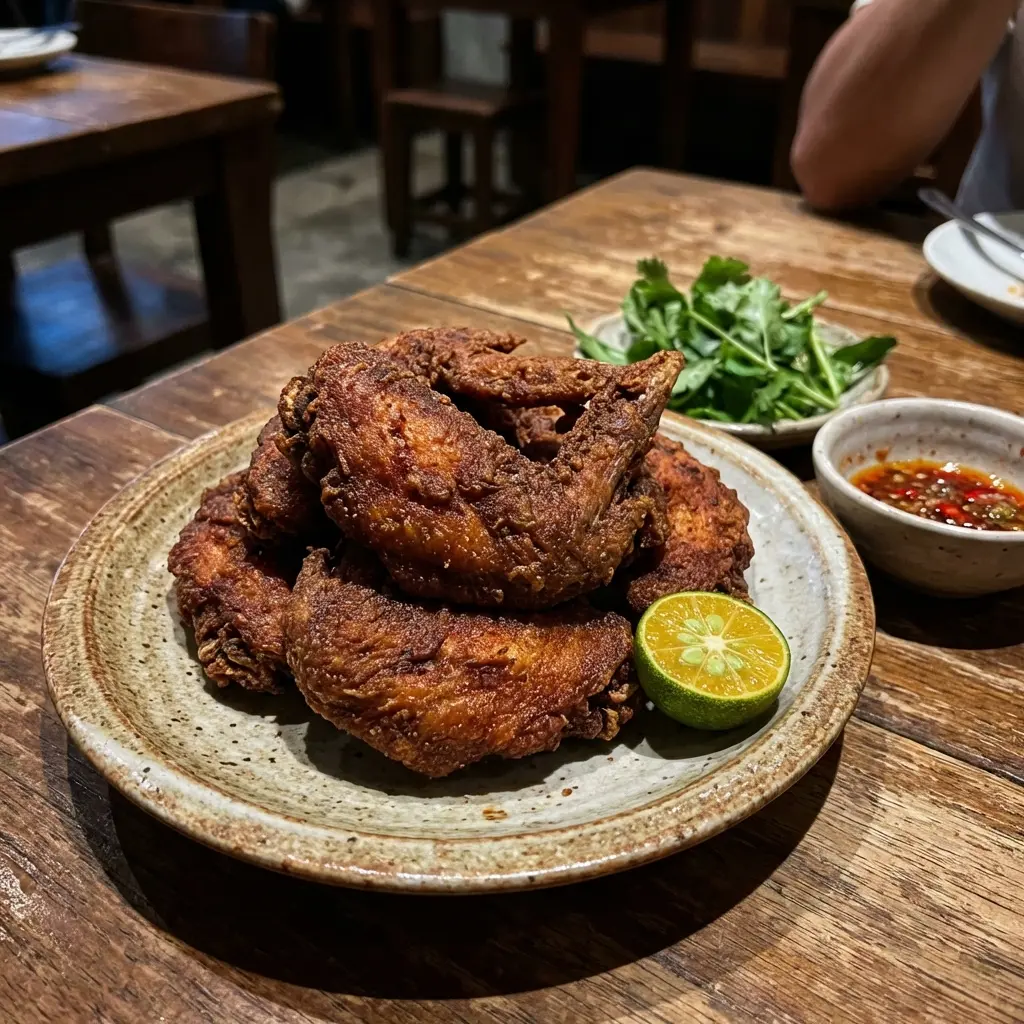
Har Cheong Gai (prawn paste chicken) is the quintessential zi char dish—chicken marinated in fermented prawn paste, coated in batter, and deep-fried until shatteringly crispy. The flavour is savoury, slightly funky, and completely addictive. Order this almost always.
"If a zi char stall can't make good har cheong gai, leave. It's the baseline test of competence."
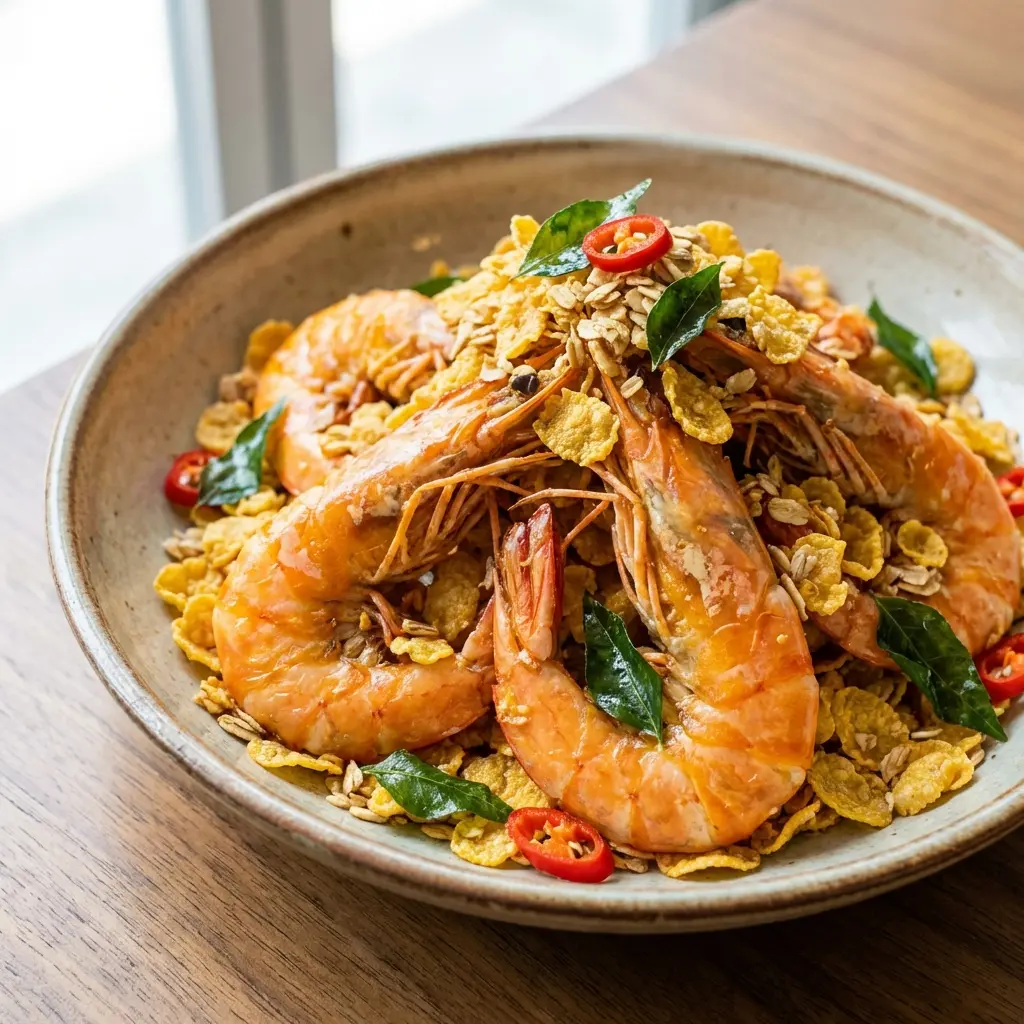
Cereal Prawns coat fresh prawns in a buttery, savoury cereal crumb (often Nestum) that's crispy, sweet, and impossible to stop eating. The cereal is as good as the prawns—don't waste it.
Sambal Kangkong stir-fries water spinach with chilli and belacan, creating a spicy, savoury vegetable that holds its crunch. The proper version has smoky wok hei and just the right amount of spice.
Coffee Pork Ribs braise meaty ribs in a sweet, sticky sauce with coffee undertones. It's rich and indulgent—one of those dishes that makes you wonder why anyone invented any other way to cook pork.
Hotplate Tofu arrives at your table sizzling, the sauce bubbling dramatically. Beyond the theatre, the tofu is silky, the sauce savoury with minced meat and vegetables. Everyone loves hotplate tofu.
Sweet and Sour Fish is the crowd-pleaser that even non-adventurous eaters enjoy. The sauce is tangy and sweet, the fish is battered and fried. It's familiar and reliable.