"You can cook 90% of local dishes if you have these staples in your kitchen. A checklist for the aspiring home cook."
At a Glance: Pantry Priorities
- 1 Start with the trinity: light soy, dark soy, and oyster sauce
- 2 Stock fresh aromatics weekly: garlic, ginger, shallots, green onions
- 3 Keep dried goods forever: shiitake mushrooms, ikan bilis, dried shrimp
- 4 Don't forget coconut milk and palm sugar for Malay/Peranakan dishes
- 5 Invest in good oils: neutral for frying, sesame for finishing
Building Your Foundation
Every great Singaporean home cook knows that the magic doesn't start at the stove—it starts in the pantry. A well-stocked kitchen means you're always twenty minutes away from a satisfying meal, whether it's a simple plate of fried rice or a more ambitious curry.
"My grandmother could walk into an empty kitchen and cook a feast, because her pantry was never empty. The sauces, the dried goods, the aromatics—they were always there, waiting."
This guide covers the essential ingredients that form the backbone of Singaporean cooking. Some you'll use daily, others weekly, but all are worth having on hand. The investment upfront pays dividends every time you cook.
The beauty of a well-stocked pantry is spontaneity. When you have the fundamentals, you can pivot from fried noodles to steamed fish to curry based on whatever protein looks good at the market that day.
The Holy Trinity of Sauces
If you buy nothing else, buy these three sauces. They form the foundation of countless Singaporean and Chinese dishes.
Light Soy Sauce (生抽) is your primary source of saltiness and savoury depth. Use it for marinating, stir-frying, and seasoning. A good light soy sauce has a clean, salty taste with subtle fermented complexity. Pearl River Bridge and Lee Kum Kee are reliable brands, though many home cooks swear by Tai Hua or Kwong Woh Hing.
"Light soy is the workhorse—it does the heavy lifting in almost every dish. Dark soy is the makeup—it makes everything look beautiful. Oyster sauce is the magic—it ties everything together."
Dark Soy Sauce (老抽) is thicker, sweeter, and used primarily for colour. A few drops transform pale fried rice into that appetising caramel hue. It's essential for char kway teow, braised dishes, and anywhere you want rich, dark colour. Use sparingly—a little goes a long way.
Oyster Sauce (蠔油) brings umami, body, and a subtle sweetness that rounds out stir-fries. Premium brands use real oyster extract and have a more complex flavour—Lee Kum Kee's Premium is excellent, and their Panda brand is a good budget option. Vegetarian versions made from mushrooms work surprisingly well.
The Supporting Cast of Sauces
Beyond the trinity, these sauces expand your repertoire significantly.
Sesame Oil is used as a finishing oil, never for frying—it burns at low temperatures and turns bitter. A few drops added at the end of cooking bring nutty, toasted depth to everything from soups to noodles. Kadoya is the gold standard; store it in a cool, dark place as it goes rancid relatively quickly.
"The moment sesame oil hits a hot dish and that aroma rises—that's when you know the dish is complete. It's the final signature."
Shaoxing Wine (紹興酒) is Chinese cooking wine that adds depth to marinades, stir-fries, and braises. It deglazes beautifully and eliminates the 'gamey' taste from meat and seafood. Available in supermarkets, look for versions without added salt if possible.
Fish Sauce (nam pla or nuoc mam) is essential for Southeast Asian flavours—it's the secret behind many Malay and Thai-influenced Singaporean dishes. The pungent smell mellows dramatically during cooking, leaving pure umami. Squid brand and Tiparos are reliable choices.
Rice Vinegar adds brightness and acidity. Black vinegar (Chinkiang vinegar) is essential for dumplings and Hokkien-style dishes, while white rice vinegar works for Cantonese preparations. Keep both.
Aromatics: The Flavour Builders
No Singaporean kitchen functions without fresh aromatics. These are bought frequently and used constantly.
Garlic is fundamental. Buy whole heads and peel as needed—pre-peeled garlic loses potency quickly. For most dishes, mince or slice thinly. A good tip: smash cloves with the flat of your knife to release more flavour and make peeling easier.
"In my mother's kitchen, the first sound of dinner was always the sizzle of garlic hitting hot oil. That sound meant food was coming."
Ginger appears in everything from steamed fish to herbal soups. Look for firm, smooth-skinned pieces. Young ginger (pinkish, less fibrous) is milder and works well in dishes where you eat the ginger itself. Mature ginger (tan, more fibrous) packs more punch for cooking.
Shallots bridge the gap between onion and garlic with their sweet, mild flavour. Essential for rempah (spice pastes), they're also sliced thin and fried crispy as a topping. Buy extra—you'll use more than you expect.
Green Onions (scallions) finish dishes with colour and freshness. The white parts are more pungent and can be cooked; the green parts are milder and usually added raw at the end. A bowl of porridge without sliced scallions is a sad bowl of porridge.
Spices and Pastes: Where Flavour Deepens
Singaporean cooking draws from multiple spice traditions. Keep these on hand for authentic flavours.
White Pepper is preferred over black in most Chinese-influenced dishes. It has a sharper, more pungent heat that works beautifully in clear soups, stir-fries, and on fried eggs. Sarawak white pepper from Malaysia is considered the finest—worth seeking out.
"Black pepper is for the table. White pepper is for the wok. My grandmother was very clear about this."
Five-Spice Powder (五香粉) is a fragrant blend of star anise, cloves, cinnamon, Sichuan pepper, and fennel. Essential for Hokkien braised dishes, lor mee, and ngoh hiang. Use sparingly—it's powerful.
Curry Powder comes in different blends for different purposes. Meat curry powder is more robust with cumin and coriander; fish curry powder is lighter with more turmeric and fenugreek. Baba's brand is widely available and reliable. Keep both varieties.
Sambal Belacan is the chilli paste that defines much of Singaporean cooking—fresh chillies pounded with fermented shrimp paste (belacan). You can make it fresh or buy decent versions in jars. Homemade is better, but jarred sambal saves time on busy nights.
Taucheo (豆酱), fermented soybean paste, adds deep savoury complexity to steamed fish, stir-fried vegetables, and braised dishes. It's the secret behind many home-style preparations that taste somehow richer than restaurant versions.
Dried Goods: The Pantry Backbone
Dried ingredients keep indefinitely and provide essential flavour foundations.
Dried Shiitake Mushrooms are indispensable. Rehydrated in warm water, they add meaty depth to soups, braises, and stir-fries. The soaking liquid is pure umami gold—never discard it. Look for thick-capped mushrooms with white cracks (花菇), which indicate quality.
"The best chicken rice uses shiitake soaking liquid in the rice. That's the kind of secret that separates good from great."
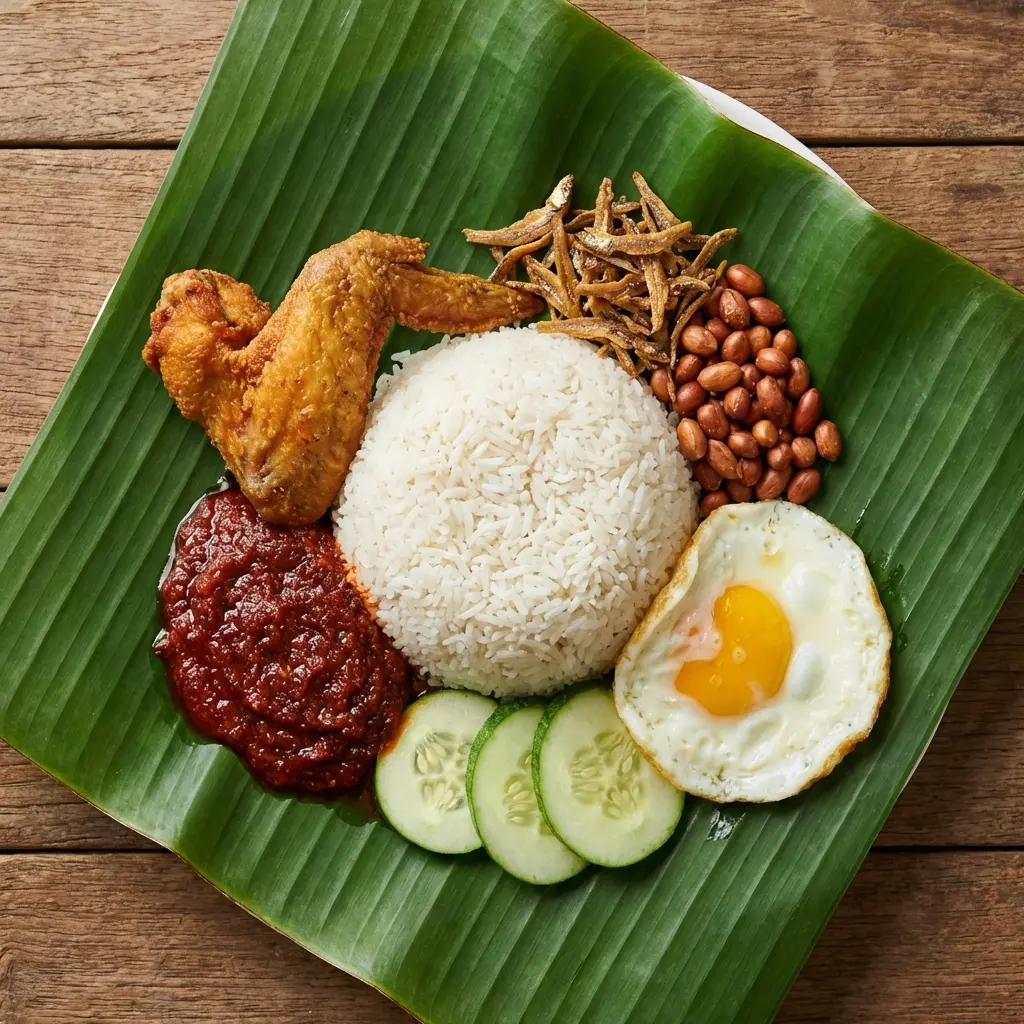
Ikan Bilis (dried anchovies) are the base of sambal, nasi lemak, and countless stocks. Larger ones are fried crispy as a snack or side; smaller ones dissolve into sauces and gravies. Store in the freezer to prevent rancidity.
Dried Shrimp (Hae Bee) contribute intense savoury depth to everything from carrot cake to fried rice. Soak briefly to soften, then chop or pound according to your recipe. The soaking liquid, again, is flavourful and shouldn't be wasted.
Tapioca Starch and Corn Starch are essential for coating proteins before frying (creates crispness) and thickening sauces (creates glossy finish). Tapioca creates a slightly chewier texture; corn starch is more neutral.
Rice in multiple varieties: jasmine rice for daily eating, glutinous rice for sticky rice dishes and desserts. Thai Hom Mali is the benchmark for jasmine rice. Store in airtight containers to prevent weevils.
Coconut and Palm Sugar: The Tropical Essentials
These ingredients are essential for Malay, Peranakan, and many Indian-influenced dishes.
Coconut Milk comes in cans (convenient) or fresh from wet markets (superior). Canned coconut milk separates into cream and water—the thick cream at the top is richer and works better for curries, while shaking the can gives you consistent milk throughout. Ayam brand and Aroy-D are reliable.
"Fresh coconut milk from the wet market auntie, squeezed that morning—there's no substitute. But when that's not possible, a good can does the job."
Coconut Cream is thicker than coconut milk and adds richness to desserts and finishing touches to curries. You can buy it separately or scoop the thick layer from the top of unshaken coconut milk cans.
Palm Sugar (gula melaka) is essential for authentic Singaporean desserts. The dark, caramel-rich sweetness is irreplaceable in ondeh-ondeh, bubur cha cha, and kueh. Sold in cylinders or discs, it should be shaved or chopped before measuring. Store in an airtight container; it hardens with moisture exposure.
Desiccated Coconut is used in kueh and desserts. Fresh grated coconut from the market is superior but desiccated works when fresh isn't available. Rehydrate slightly with warm water if needed.
Oils: Choosing the Right Fat
Different oils serve different purposes. Understanding when to use each prevents flavour mishaps.
Neutral Oil for high-heat cooking is essential. Peanut oil is traditional and adds subtle nutty flavour, but canola, vegetable, or rice bran oil all work well. The key is high smoke point and minimal flavour interference. Avoid olive oil for Asian cooking—it's too assertive.
"My uncle ran a zi char stall for forty years. He used peanut oil for everything. 'It fries clean,' he'd say, 'and it tastes right.'"
Sesame Oil, as mentioned, is strictly for finishing. Its low smoke point means it burns immediately at frying temperatures. A small bottle lasts surprisingly long since you use it drop by drop.
Lard, if you're willing to use it, creates incomparable char kway teow and fried rice. The subtle porky flavour and high smoke point make it the traditional choice for many dishes. Render it yourself from pork fat or buy it pre-rendered. Store in the refrigerator.
Chilli Oil brings heat and fragrance. You can buy it (Lao Gan Ma is excellent) or make your own by heating oil and pouring it over dried chilli flakes with Sichuan peppercorns. Homemade is superior but store-bought saves time.
The Refrigerator and Freezer
Some essentials belong in cold storage.
Eggs are non-negotiable. They're a complete protein that transforms into a dozen dishes: fried over rice, scrambled into fried rice, steamed with soy sauce, turned into omelette, or beaten into batter. Buy fresh from wet markets when possible.
"If you have eggs and rice, you have dinner. Everything else is bonus."
Tofu comes in many forms. Firm tofu (tau kwa) works for frying and braising. Soft tofu (egg tofu or Japanese silken) is for soups and steaming. Keep a few blocks—they're versatile and protein-rich. Check expiry dates and store in water, changed daily, once opened.
Kangkong (water spinach), chye sim, and other leafy greens don't last long but are worth buying every few days. Store loosely wrapped in paper towels inside plastic bags in the crisper drawer.
Frozen prawns and fish fillets provide backup protein. IQF (individually quick frozen) prawns defrost easily and cook well. Keep a bag in the freezer for emergency stir-fries.
Ancient grains of wisdom apply here: a well-stocked freezer extends your pantry's reach. Pandan leaves, curry leaves, and galangal all freeze beautifully, letting you cook Indonesian and Malay dishes on demand.
Organising Your Pantry
A well-organised pantry makes cooking faster and reduces waste.
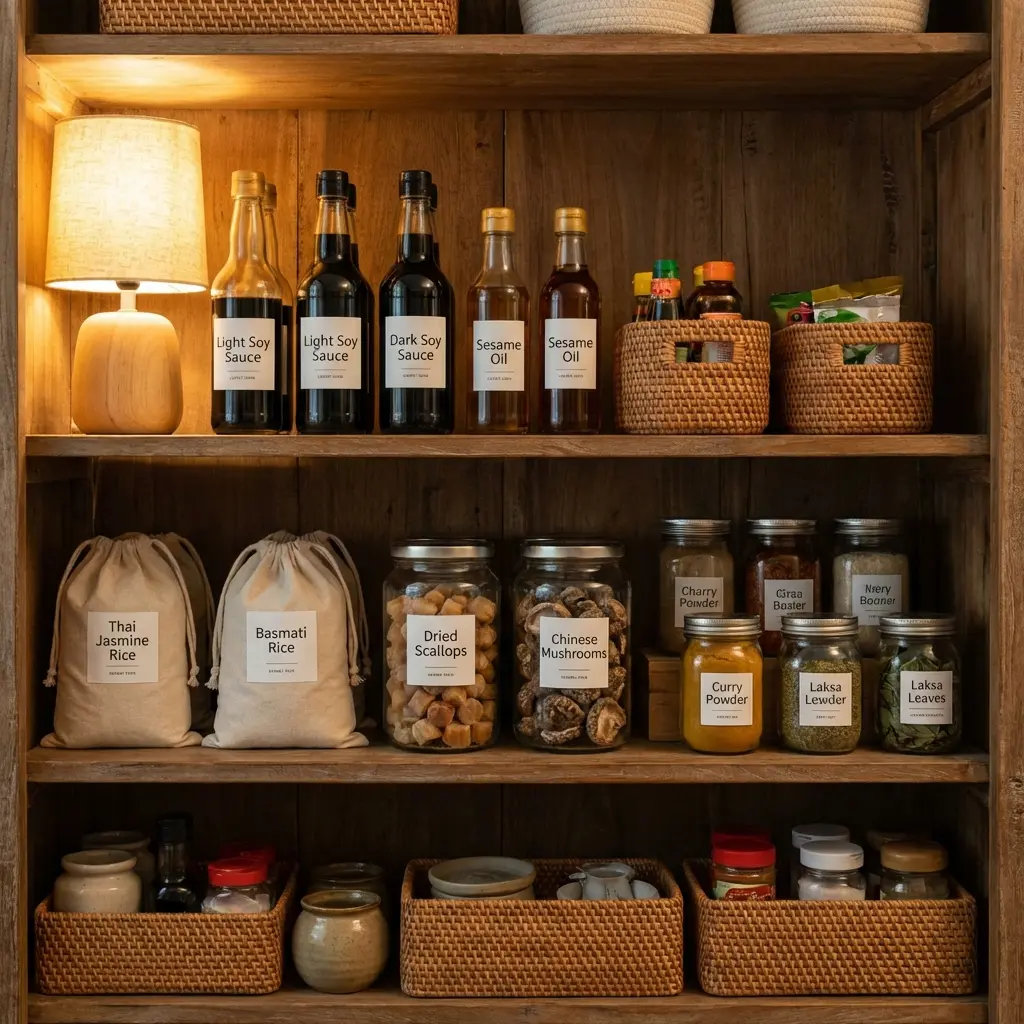
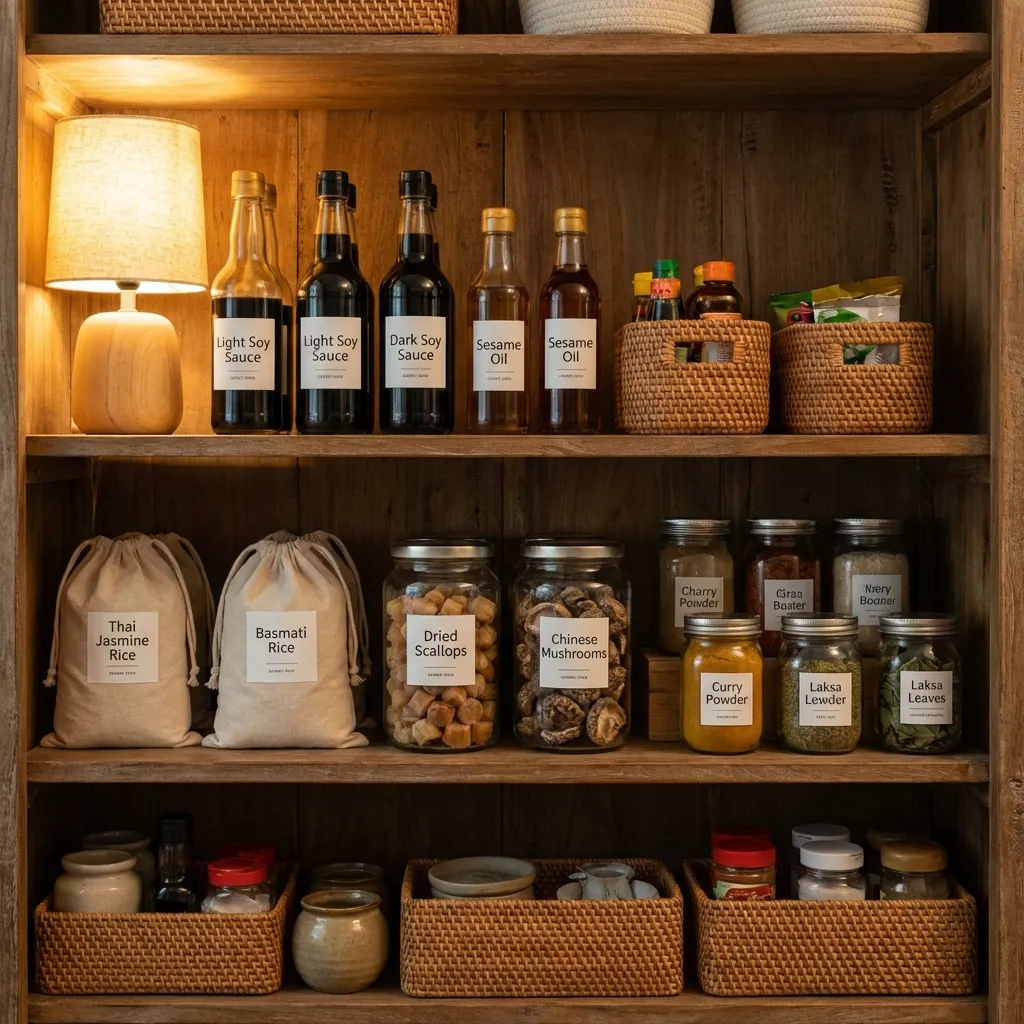
Group items by use: all soy sauces together, all dried goods in one area, all spices visible and accessible. When you can see everything at a glance, you know what needs restocking and what you have to work with.
"The best pantries tell you what to cook. You open the doors, and the ingredients speak to each other. That's when spontaneity happens."
Label and date items when you open them, especially oils and spices that lose potency over time. A marker and masking tape system works well. Rotate stock—use older items first.
Invest in airtight containers for dried goods. Weevils are persistent and devastating—once they get into rice or flour, everything needs discarding. Glass or sturdy plastic containers with good seals are worth the cost.
Transfer sauces to squeeze bottles for controlled pouring. It prevents over-seasoning and keeps bottles cleaner. Clear bottles help you see how much remains.
Finally, stock according to how you actually cook. If you make curry weekly, keep curry powder in quantity. If you rarely make desserts, a small amount of palm sugar suffices. The perfect pantry is personalised to your cooking habits, not to some imagined ideal.
Interactive Shopping Checklists
Use these checklists to track what you have and what you need. Your progress is saved automatically!