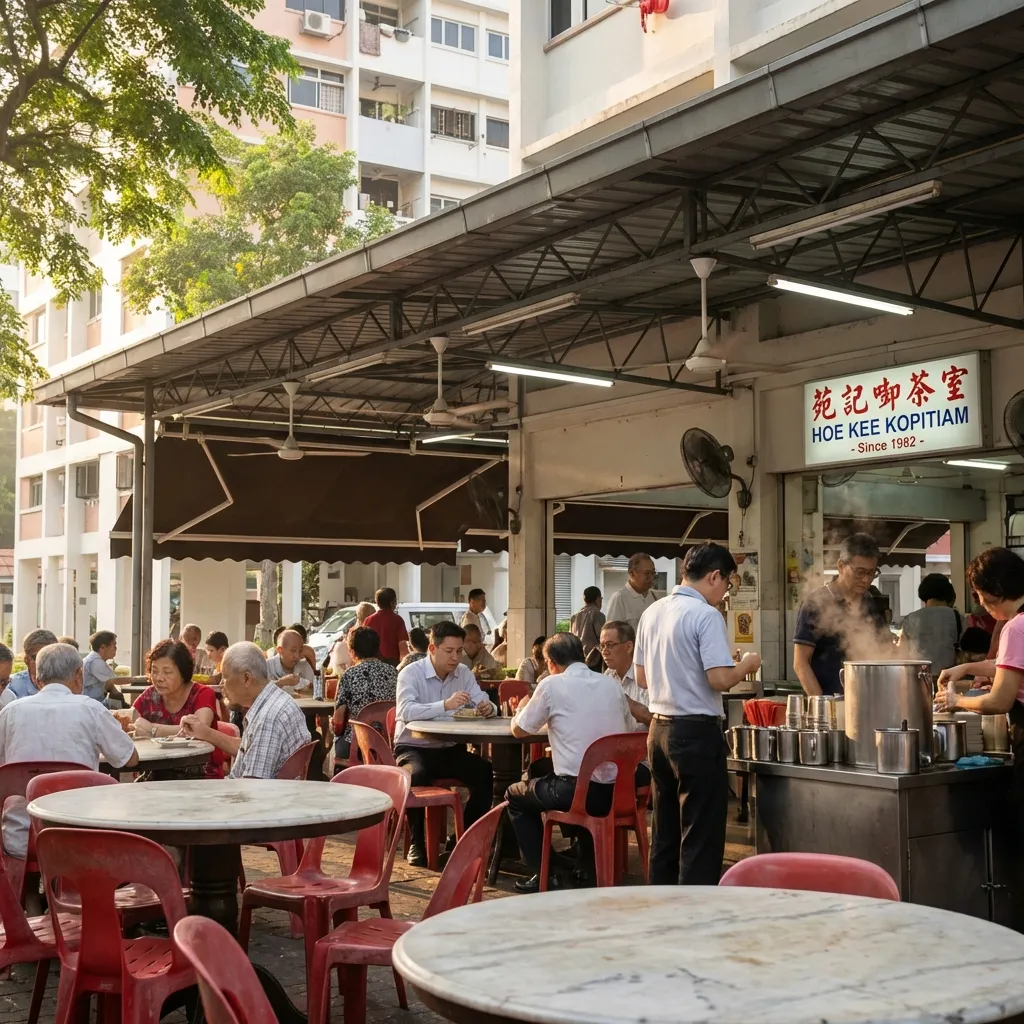
Neighbourhood Favourites: Hidden Gems in the Heartlands
"You don't need to go to town for good food. The best meals are often found right under your block."
Quick Summary
- Singapore's best food is found in HDB heartlands, not tourist areas
- Toa Payoh, Bedok, and AMK offer legendary hawker experiences
- Neighbourhood stalls often haven't changed recipes in decades
- Local knowledge beats any food blog—ask residents where they eat
- Signs of quality: handwritten menus, limited options, uncle/aunty operations
The Case for Heartland Eating
Singapore's food reputation was built in the heartlands, not in Orchard Road restaurants. The hawker centres that defined our culinary identity sit in the shadows of HDB blocks, serving residents who've known the stalls for decades.
These neighbourhood gems rarely make magazine lists or attract tourist buses, but they represent something more valuable: consistency, community, and cooking perfected over generations.
There's a reason your favourite uncle's recommendation beats any food blog. He's been eating there for thirty years. He knows which stall changed hands, which one uses MSG, which one closes randomly on Tuesdays. This local knowledge is irreplaceable.
💡 The best neighbourhood food is often found at stalls with no English signage. The locals know; tourists don't.
Toa Payoh: The Old Guard
One of Singapore's oldest satellite towns, Toa Payoh is a treasure trove of traditional flavours. The hawkers here started in the 1960s and 70s—many are second-generation now, but the recipes remain unchanged.
Lorong 8 Market is the spiritual centre:
- • The rojak stall has been there for decades, the uncle still hand-grating the pineapple
- • The dim sum hawker makes everything by hand—siew mai, har gow, char siew bao—sold at prices frozen in time
- • The chicken rice at Block 75 has a following that borders on cult
"I moved to Punggol five years ago. But I still drive back to Toa Payoh for chicken rice every week. My wife says I'm crazy. But she comes along too."
— Ah Hock, 58, taxi driver
The charm of Toa Payoh food is its stubbornness. These stalls haven't modernised because they don't need to. Their customers don't want innovation—they want the same taste they've known since childhood.
🎯 Visit Toa Payoh hawkers before 11am. Many close by 2pm once their daily preparation runs out—they refuse to make more.
Bedok: The Food Capital of the East
Easties will fight you on this: Bedok 85 is legendary, and nothing else comes close.
This sprawling hawker centre on Bedok North Street 4 transforms after dark into one of Singapore's best supper scenes:
- • The soup bak chor mee draws crowds from across the island
- • The stingray at the corner—charred, slathered in sambal, served on banana leaf—is worth the journey from any part of Singapore
- • The satay uncle has been there since the 1980s, his fan system an engineering marvel of smoke management
Beyond 85, Bedok Corner Food Centre offers daytime excellence. The prawn noodles have a stock so rich it coats your lips; the mee rebus gravy is famously thick.
"Growing up in Bedok, I thought this was normal. Then I moved west for work and realised what I was missing. Now I'm back in Bedok. For the food, honestly."
— Wei Lin, 34, teacher
💡 Bedok 85 is best visited between 9pm and midnight. Earlier is too crowded; later sees reduced selection as stalls sell out.
Ang Mo Kio: The Heartland Hub
There's a subtle charm to Ang Mo Kio's massive hawker centres. AMK Hub's basement is reliable but unremarkable—the real action is at the neighbourhood markets.
Block 226's food centre is legendary for its Hokkien mee, the uncle's wok hei unmatched in the central region. The standards across AMK are incredibly high without the hype. No viral TikToks, no 'hidden gem' lists—just consistently excellent hawker food served to locals who know what good means.
More neighbourhood institutions:
- • The carrot cake stall at Block 628 uses the traditional method, pressing the cakes in-house rather than buying pre-made
- • The oyster omelette opposite is generous with eggs and fresh cockles
These aren't famous stalls. They're neighbourhood institutions.
"I've eaten at the Block 226 Hokkien mee since primary school. That's thirty-five years. The uncle knows my order. His son is taking over now. I hope it stays the same."
— Marcus Tan, 41, software engineer
🎯 AMK hawkers generally operate on old-school hours—breakfast and lunch only, closed by 3pm. Plan accordingly.
Clementi: West Side Glory
Often overlooked in favour of flashier western neighbourhoods, Clementi offers incredible value and quality for those willing to explore.
Clementi West Food Centre is the anchor, but the real gems hide in the smaller markets and coffeeshops scattered throughout:
- • The Indian rojak at Block 328 is legendary—the uncle's chilli sauce recipe hasn't changed in forty years
- • The duck rice nearby serves birds braised so tender they collapse under chopstick pressure
- • Sunset Way market offers upscale hawker fare—fishball noodles with house-made balls, Teochew porridge with twelve-item selections
"The west is underrated because it's far. But Clementi has some of the best price-to-quality ratios in Singapore. I save serious money eating there."
— Sandra Lim, 38, food blogger
💡 Visit Clementi on weekday mornings for the full market experience. Aunties have been sourcing here for decades—follow their lead.
Tampines: The New Generation
Tampines represents the evolution of heartland dining. Yes, there are the traditional hawker centres—Tampines Round Market remains excellent for bak chor mee and lor mee—but the neighbourhood also hosts newer concepts that bridge old and new.
Tampines Street 81 has a hawker centre that feels more modern while maintaining traditional standards:
- • The wanton mee is consistently ranked among Singapore's best, the noodles hand-pulled each morning
- • The economic rice stalls offer variety that rivals any food court
- • Century Square food court, while technically not hawker, hosts established hawkers who've upgraded their operations—same recipes, air-conditioned comfort
"My parents lived in Tampines since the 1990s. The food has only gotten better. New blood coming in, young hawkers with traditional training. It's exciting."
— Kenneth Low, 36, property agent
🎯 Tampines Hub basement has a modern hawker centre with good variety—perfect for families who can't agree on what to eat.
Jurong West: The Working Class Hero
Jurong West doesn't pretend to be trendy. This is working-class Singapore, and the food reflects it: hearty, affordable, generous portions.
Jurong West Market and Food Centre is the heartbeat, a massive complex serving thousands of residents daily:
- • The claypot rice uses real charcoal
- • The chicken rice uncle slices birds at terrifying speed
- • The fish soup is old-school Teochew style—clear broth, fresh fish, no milk
Around the industrial estates, coffee shops serve workers who need substance. The economic rice portions are legendary—the aunties load plates high because their customers need fuel. Prices hover at pre-inflation levels because margins are tight and competition fierce.
"I work in Jurong, and lunch here is unbeatable. Four dollars for rice, two vegetables, one meat, and you're full until dinner. Try finding that in town."
— Ah Seng, 45, forklift operator
💡 Jurong West stalls cater to workers, so lunch crowds peak at 12-12:30pm sharp. Go earlier or later to avoid the rush.
Woodlands: The Northern Gem
Singapore's most northern point has a food scene that rivals any central neighbourhood.
Woodlands Civic Centre Market is exceptional—the mee pok here has a devoted following, the ban mian traditional and generous. Causeway Point's basement food court hosts hawkers who've earned their spots through decades of excellence.
But the real exploration lies in the smaller markets:
- • Woodlands Street 82 has a nasi lemak stall that opens at 5am; by 8am, the queue snakes around the building
- • The roti prata at Sembawang coffeeshops is cooked to order, crispy and layered
"People forget about Woodlands unless they're going to Malaysia. Their loss. The food here is incredible, and half the price of central areas."
— David Chen, 67, retiree
The proximity to the causeway influences the cooking too—Malaysian influences creep in, making Woodlands food distinct from southern Singapore.
🎯 Woodlands nasi lemak stalls often sell out before 9am. If you're serious, arrive at 6am.
Geylang: The Night Market Master
Geylang occupies a unique space in Singapore's food geography. By day, it's quiet—old shophouses, traditional businesses. By night, it transforms into a sprawling open-air food paradise.
The legendary stalls:
- • The frog leg porridge stalls along Lorong 9 are institutional
- • The beef hor fun at the corner of Lorong 35 draws taxi drivers from across the island
- • The durian stalls—seasonal eruptions of smell and commerce—represent Singapore at its most unapologetically local
Yes, Geylang has other reputations. But the food reputation is what matters here. Multiple generations of families have eaten here, chasing dishes that can't be found elsewhere.
"I bring my kids to Geylang for frog leg porridge. They think it's exotic. I tell them—this is Singapore. This is our food heritage."
— Grace Wong, 42, investment banker
💡 Geylang food peaks between 10pm and 2am. Earlier is quiet; later sees reduced variety. The sweet spot is around midnight.
Tiong Bahru: Heritage Meets Hip
Tiong Bahru represents gentrification done relatively right. The original hawker centre remains, protected by fierce local loyalty.
The heritage stalls:
- • The chwee kueh stall has operated since 1958—literally pre-independence Singapore, serving soft rice cakes with preserved radish and chilli
- • The lor mee nearby uses a recipe unchanged for sixty years
Around the traditional core, cafes and bistros have sprouted. Some are pretentious; others genuinely good. The tension creates something interesting: hipster coffee shops next to kopitiam uncles, artisanal bakeries across from traditional kueh stalls.
"Tiong Bahru is complicated. But the hawkers survived. That's what matters. The tourists come for the cafes, stay for the chwee kueh."
— Michelle Lim, 45, architect
The estate itself is worth the visit—Singapore's first public housing, art deco architecture preserved amid modern development. Food is the draw, but history is the bonus.
🎯 Tiong Bahru Market's ground floor is wet market (morning only); the food centre is upstairs. Combine both for the full experience.
How to Find Your Own Gems
The best neighbourhood food isn't on lists—it's in the knowledge of people who live there. Ask your taxi driver, your colleague from that area, the security guard at your friend's condo. Locals know which stalls are actually good versus which ones just have long queues.
Signs to look for:
- • Handwritten menus—they cook what they know, not what's trending
- • Uncle/aunty operations—two people can maintain quality better than franchised staff
- • Limited menu—specialisation suggests expertise
- • Cash only—they're not trying to scale, just cook
Signs to avoid:
- • Tourist groups
- • Laminated picture menus
- • Staff in matching uniforms
- • Credit card machines at a hawker stall
These aren't absolute rules, but they're useful filters.
"I moved to a new neighbourhood last year. I asked the old uncle at the kopitiam where he eats. Now I eat there too. Best chicken rice I've found in ages."
— Priya Menon, 33, civil servant
The heartlands feed Singapore. Always have, always will. Go find your own gems.
Know a Hidden Gem?
We're always looking to discover new neighbourhood favourites. Share your local finds with our community.
Share Your Discovery