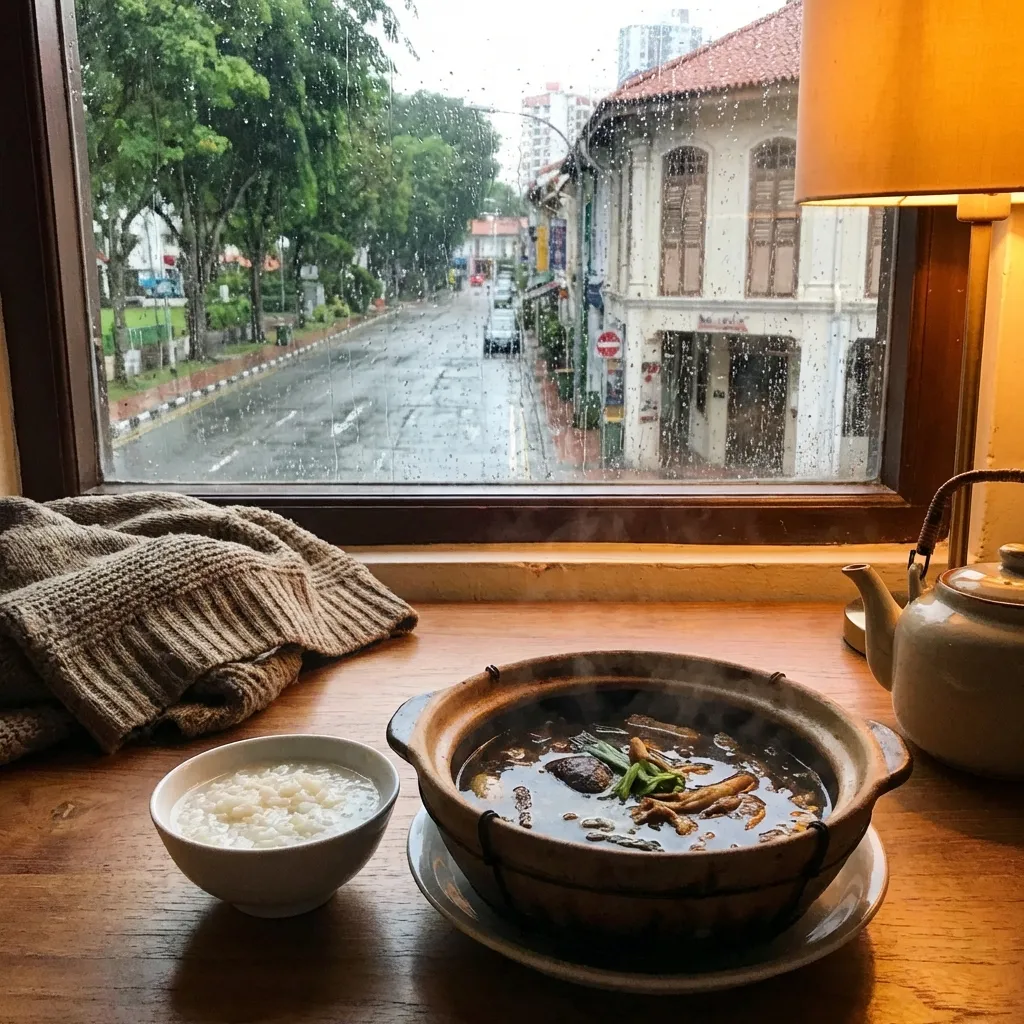
"When the sky turns grey or we're feeling down, these are the dishes that act as a warm hug for the soul."
Quick Summary
- Comfort food works through association—memory and emotion, not just taste
- Singaporean comfort foods share traits: warmth, simplicity, accessibility
- Century egg porridge and fish soup lead the healing foods category
- Yong tau foo offers comfort through personalisation and control
- The simplest comfort meal—rice, fried egg, soy sauce—works every time
The Science of Comfort Eating
There's actual science behind comfort food. When stressed, our bodies crave calorie-dense foods—an evolutionary response to uncertain times. But beyond calories, comfort food works through association.
The dishes we reach for aren't objectively the 'best' foods; they're the ones linked to positive memories, safety, and care.
In Singapore, these comfort foods share common traits:
- • Warmth—both physical and emotional
- • Simplicity—no fancy techniques required
- • Connection to home or childhood
They're rarely fancy. They don't require reservations. They exist in hawker centres and home kitchens, available whenever the soul needs soothing.
💡 Keep the ingredients for at least one comfort dish always stocked in your pantry. When you need it, you won't want to shop.
Century Egg & Minced Pork Porridge
The ultimate sick day food, but delicious any day.
There's something profoundly healing about Cantonese-style congee—rice cooked past the point of structure into a silky, flowing mass that requires no effort to eat. The century egg provides savoury depth and a distinctive creaminess, while the minced pork adds texture and protein.
The toppings matter:
- • Plenty of spring onions
- • Fried shallots for crunch
- • A drizzle of sesame oil
- • White pepper liberally applied
Some people add a raw egg that cooks in the residual heat; others prefer their congee plain.
"When my mother made this porridge, she'd cook the rice for three hours. Nowadays everyone uses rice cooker or instant. Not the same. The rice must break down completely—you shouldn't see any grain."
— Madam Ng, 72, retiree
The medicinal quality isn't imagined. Congee is easily digestible, hydrating, and warming. It's what bodies need when they're struggling.
🎯 For hospital-grade comfort porridge, use broken rice or soak regular rice overnight. This ensures complete breakdown into silk.
Sliced Fish Soup (with Milk)
Rich, creamy, yet surprisingly light.
The milky version of sliced fish soup has achieved cult status in Singapore, with famous stalls commanding hour-long queues.
The paradox is its simplicity:
- • Fried fish bones form the stock base
- • Evaporated milk adds creaminess
- • Fresh sliced fish (batang or threadfin) cooks gently in the broth
Served with thick bee hoon or rice, it's simultaneously delicate and deeply satisfying.
The soup's comfort comes from its warmth and the act of eating it—fishing out tender pieces of white fish, slurping noodles, drinking the rich broth. It demands no thought, only consumption.
"I eat fish soup when work gets overwhelming. Something about it resets my brain. I leave the hawker centre calmer than when I entered."
— Sarah Tan, 35, banker
💡 Request extra fried fish pieces if the stall offers them. They add texture contrast and intensify the fish flavour in the soup.
Ban Mian (Hand-Pulled Noodles)
There's magic in the uneven texture of hand-pulled noodles.
Unlike machine-made uniformity, ban mian has thick parts and thin parts, chewy sections and tender ones. Each bite is slightly different, and somehow that irregularity is deeply comforting—a reminder that imperfection is human.
The soup version (the standard):
- • Anchovy broth as the base
- • Minced pork for savouriness
- • Leafy vegetables for freshness
- • Crowned with a poached egg
Dry ban mian has equally passionate advocates—tossed with dark sauce and served with soup on the side. The ikan bilis (dried anchovy) garnish provides essential crunch and a hit of concentrated umami.
"My grandmother made ban mian every Sunday. Watching her pull the dough, tear pieces directly into the pot—it was hypnotic. She never measured anything. Just agak-agak."
— Daniel Goh, 42, food writer
The soup should taste of the sea without being fishy. The vegetables should be barely wilted. The egg must be runny. These details elevate ban mian from peasant food to comfort royalty.
🎯 Break the runny egg yolk into the soup and stir. The richness transforms every subsequent slurp.
Yong Tau Foo (Your Way)
The ultimate personalised comfort.
Yong tau foo is less a dish than a system—you choose what you want, how much you want, and how you want it served:
- • Soup or dry?
- • Laksa gravy or clear broth?
- • Sweet sauce or chilli?
This agency is itself comforting. You're not submitting to a chef's vision; you're constructing your own.
The ingredients—stuffed bitter gourd, fried beancurd, fishball, various greens—might seem random, but everyone develops their perfect combination over time. Some people always get the same ten items; others vary based on mood.
The ritual of selection, the anticipation while it's prepared, the satisfaction of a bowl made exactly to your specifications—this is comfort through control.
"My YTF order hasn't changed in twenty years. Three tofu, two bitter gourd, tau pok, ladies fingers, two leafy greens, fishball, and one mock meat. Soup, with chilli on the side. It's my happy place."
— Jenny Lim, 48, teacher
💡 Always include at least one stuffed item (bitter gourd or tau pok) for the contrast between wrapper and fish paste filling.
Kopi C & Kaya Toast
Not a full meal, but perhaps the most comforting combination of all.
The elements:
- • Crisp toast, edges slightly charred
- • Cold butter that doesn't quite melt, creating pockets of richness
- • Sweet, fragrant kaya that tastes of coconut and pandan
- • Kopi C—coffee with evaporated milk—sweet and strong enough to cut through everything
This is breakfast, but also mid-morning pick-me-up, afternoon break, and pre-dinner snack. It's wherever you need it to be.
The ritual matters: ordering at the counter, finding a marble-topped table, watching the uncle work the sock filter. The taste is secondary to the experience—a momentary pause in Singapore's relentless pace.
"I have kaya toast every day. Sixty years, same coffee shop, same order. The owners changed three times. The taste changed too. But the feeling? Same same."
— Uncle Tan, 78, retired hawker
🎯 Request your toast 'crispy' (karipap) if you prefer more char. The contrast between crispy exterior and soft interior is superior.
Hokkien Mee (Prawn Noodles)
The wet version—thick yellow noodles and thin rice vermicelli, braised in rich prawn stock until the liquid is absorbed. The flavour is oceanic without being overwhelming, sweet and savoury in that quintessentially Singaporean way.
What makes good hokkien mee:
- • High heat and patience
- • Essential wok hei
- • Proper braising time—too short leaves noodles bland, too long makes them mushy
- • Non-negotiable pork lard croutons
- • Fiery sambal accompaniment
"My father's hokkien mee was legendary in our kampong. He used to collect prawn heads from everyone's dinners, boil them for hours. You can't buy that stock."
— David Chua, 65, retiree
The comfort is in the richness—this is not light eating. It sits heavy and warm, a physical presence in your stomach that grounds you.
💡 Squeeze the lime generously over the noodles before eating. The acidity lifts the richness and brings the dish to life.
Bak Kut Teh
Pepper or herbal? The divide runs deep, and everyone has a camp.
- • Teochew-style: peppery and clear
- • Hokkien-style: dark and herbal
Both versions share the essential element: tender pork ribs that fall off the bone, swimming in deeply savoury broth.
The accompaniments—you tiao (fried dough), rice, and endless top-ups of soup—turn a bowl into a meal that extends as long as you need it to.
Bak kut teh is rainy day food. It's 'recovering from a cold' food. It's 'need something hearty after drinking' food. The soup warms from the inside, the pepper or herbs clear the sinuses, the pork provides substance.
"My wife makes BKT whenever I'm stressed. She knows I don't want to talk about work. Just put the pot on the table, keep the rice coming, let me drink soup until I feel better."
— Marcus Ng, 40, engineer
🎯 Keep drinking the soup until you've had at least three bowls. The comfort comes from volume as much as flavour.
Mee Siam
The criminally underrated comfort noodle.
Mee siam exists in the shadow of laksa and mee rebus, but its loyal fans argue it deserves higher status.
The components:
- • Thin rice vermicelli
- • Sweet-sour-spicy gravy
- • Tau pok chunks
- • Sliced egg
- • The essential squeeze of lime
It's a balanced complexity that rewards attention.
Unlike heavier dishes, mee siam comforts through brightness. The tamarind in the gravy provides tang, the dried shrimp adds umami, the chilli brings warmth. It's substantial but not leaden, satisfying but not excessive.
"Mee siam was my go-to during NS. After a tough day, I'd go to the cookhouse and hope they had it. When they did, everything was okay."
— Joel Tan, 32, former serviceman
The gravy must not be too thick—it should flow around the noodles, not coat them heavily.
🎯 Ask for extra lime. The sourness is what makes mee siam special, and most servings are under-limed.
Orh Nee (Yam Paste)
The dessert that hugs you back.
Traditional Teochew orh nee is a production:
- • Yam steamed until collapsing
- • Mashed with sugar and lard (yes, lard—essential for that silky texture)
- • Topped with ginkgo nuts and pumpkin
The first spoonful is always too hot, but you eat it anyway.
Modern versions often use coconut cream instead of lard, losing some of the original's richness but gaining accessibility. The fundamental comfort remains: sweetness, warmth, the soft texture that requires no chewing. It's baby food for adults, a regression to simpler times.
"My grandmother served orh nee at every family gathering. She'd made it for my grandfather when they were courting. After he passed, she kept making it. Said she could still feel him when she tasted it."
— Michelle Tan, 45, home cook
💡 Don't skip the ginkgo nuts. Their slight bitterness balances the yam's sweetness, and their texture contrasts the paste.
The Emergency Comfort Meal
Sometimes you need comfort immediately, and nothing is prepared.
The Singaporean emergency comfort meal is built from pantry staples:
- • Hot rice
- • A fried egg (over easy, so the yolk runs)
- • Dark soy sauce
- • Maybe leftover char siu or a few cubes of luncheon meat
It takes five minutes. It requires no skill. It works every single time.
This isn't a recipe—it's a survival mechanism. The warm rice, the rich yolk, the salty soy sauce, the fatty meat if available. It's the meal your mother made when nothing else was ready. It's what you make for yourself at 2am when the world feels overwhelming.
"My wife caught me eating egg and rice at midnight once. She understood immediately. Just sat with me while I ate. Didn't say anything. Sometimes you just need to eat something simple and feel okay."
— Kenneth Low, 52, accountant
The comfort foods we've discussed exist on a spectrum from elaborate (bak kut teh) to elemental (egg rice). All are valid. All work. Find the ones that heal you, and keep them close.
What's Your Comfort Food?
Everyone has a dish that makes everything okay. Share yours with our community—we'd love to hear your comfort food story.
Share Your Story