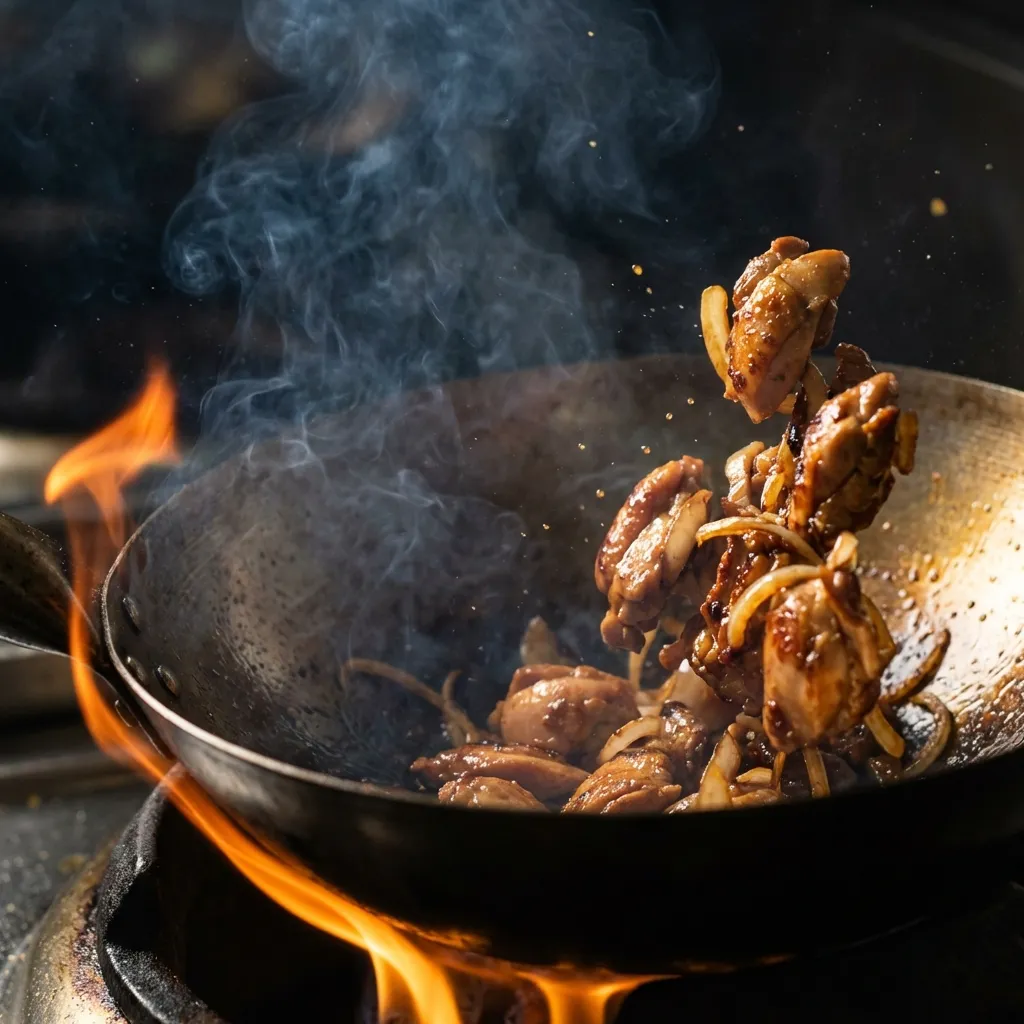
"It's not just love. There are scientific reasons why a meal cooked in your own kitchen hits different."
Quick Summary
- The Maillard reaction requires time that commercial kitchens can't afford—patience creates flavour
- Cooking aromas prime your brain over 30-60 minutes, enhancing eventual taste perception
- Better ingredient choices compound across a dish for exponentially better results
- Salt, emulsification, and temperature control work better when you're not rushed
- The psychological 'IKEA effect' means effort genuinely increases perceived deliciousness
Understanding the Science of Deliciousness
Every home cook has experienced it—a simple meal you've prepared somehow tastes infinitely better than a similar dish from a restaurant. Your mother's chicken curry, your grandmother's fish soup, your own attempt at char kway teow. There's a magic that seems impossible to replicate in commercial settings. While we often attribute this to 'love' or nostalgia, food science reveals concrete, measurable reasons why home cooking produces superior results. Understanding these principles doesn't just explain the phenomenon—it makes you a better cook. TIP: Approach your kitchen like a laboratory. Every successful dish teaches you something about how food works.
The Maillard Reaction: Patience Pays Off
Commercial kitchens operate on time constraints that directly oppose flavour development. The Maillard reaction—a chemical reaction between amino acids and reducing sugars—is responsible for the complex, savoury flavours in browned food. This reaction accelerates at 140°C and peaks around 165°C, but it requires time to develop fully. Restaurant cooks might have 2 minutes; you have 20. When you properly brown your onions for laksa paste, taking them from translucent to golden to deeply caramelized over 15-20 minutes, you're developing hundreds of flavour compounds. A rushed version produces a fraction of these. "My mum would start the onions before anything else," shares Jenny Lim, a home cook in Tampines. "By the time she added everything else, those onions had been going for half an hour. That's why her curry tasted like nobody else's." PRO TIP: Dry your proteins thoroughly before searing. Surface moisture prevents the Maillard reaction from occurring until the water evaporates—wasting precious time and heat.
The Olfactory Context: Cooking Is Foreplay
Taste is approximately 80% smell. When you cook a meal from scratch, you experience the aromas evolving over 30 minutes to an hour before eating. This extended olfactory exposure primes your brain and salivary glands in ways that reheated or quickly-prepared food cannot match. The smell of garlic hitting hot oil, the gradual deepening of curry spices, the steam rising from a pot of bak kut teh—each phase prepares your digestive system and builds psychological anticipation. Studies show that aromatic anticipation actually changes how intensely we perceive flavours. Restaurant food, assembled quickly or delivered after sitting in containers, lacks this narrative arc. TIP: Don't use a range hood on full blast when cooking aromatic dishes. The smells ARE the seasoning for your appetite.
Ingredient Quality: You Control the Inputs
Restaurants operate on razor-thin margins—typically 3-5% net profit. Every ingredient decision balances cost against quality. Your home kitchen has no such constraint. You can choose kampong chicken over frozen Brazilian imports. You can use Shaoxing wine instead of cooking wine. You can splurge on fresh prawns from the market rather than frozen bags. The compounding effect of better ingredients across an entire dish is exponential. Fresh garlic versus jarred minced garlic. Hand-pressed coconut milk versus UHT packets. Real butter versus margarine. Each upgrade seems small but together they create irreplaceable depth. "My rojak stall uses the same recipe as me," admits hawker veteran Tan Ah Kow. "But at home, I use better belacan and fresh limes. Cannot compare." PRO TIP: Identify the 2-3 ingredients that matter most in each dish and never compromise on those. For chicken rice, it's the chicken and rice. For laksa, it's the coconut milk and prawns.
Customization: Your Palate's Perfect Match
You know exactly how salty, spicy, sweet, and sour you like your food. This innate knowledge, developed over decades of eating, is impossible to replicate in commercial cooking designed for average preferences. Home cooking allows micro-adjustments at every stage. A pinch more fish sauce. A squeeze of lime at the end. Slightly more chilli padi. These personalizations create what scientists call 'optimal hedonic match'—food calibrated precisely to your pleasure centers. This is why your own version of a dish often beats the original you learned from. You've unconsciously optimized it over multiple iterations. TIP: Keep a small bowl of finishing seasonings near your stove—fish sauce, lime juice, sugar, chilli—to adjust dishes right before serving.
The IKEA Effect: Effort Creates Value
Psychologists have documented the 'IKEA effect'—we value things more when we've invested effort in creating them. This isn't illusion; it's how human cognition works. The labour of cooking activates reward pathways that increase our subjective experience of the meal. When you spend an hour making dumpling filling and hand-pleating each parcel, those dumplings genuinely taste better to you than identical ones purchased frozen. The memory of effort, the anticipation built during preparation, the pride in the finished product—these psychological factors are real components of flavour. This explains why the most elaborate dishes—your CNY reunion dinner, your Hari Raya rendang, your Christmas log cake—often taste best. Maximum effort, maximum psychological investment, maximum perceived deliciousness.
Osmosis and Salt: The Waiting Game
Salt doesn't just add 'saltiness'—it fundamentally transforms food through osmosis and protein denaturation. When you salt meat 24 hours before cooking, moisture is initially drawn out, then reabsorbed along with the dissolved salt. The result is meat that's seasoned throughout, not just on the surface. This process takes time that commercial kitchens don't have. A hawker stall cooking chicken rice cannot salt each bird the day before. But you can. Similarly, salting vegetables before stir-frying draws out moisture, concentrating flavours and preventing the dreaded 'wet wok syndrome.' "I salt my char siew pork for two days," reveals home barbecue enthusiast Marcus Ng. "Restaurant versions are marinated for hours at most. The flavour penetration is completely different." TIP: For steaks or roasts, salt at least 45 minutes ahead—or preferably overnight. The 10-40 minute window is actually the worst, as moisture sits on the surface.
Emulsification: Homemade Sauces Win
Many classic sauces rely on emulsification—the suspension of fat droplets in liquid (or vice versa). Fresh emulsions are unstable and taste dramatically better than stabilized commercial versions. Your homemade mayonnaise, whisked fresh, has a brightness and creaminess that bottled versions cannot match because manufacturers must add stabilizers that mute flavour. The same applies to salad dressings, curry sauces, and gravies. When you deglaze a pan with stock and whisk in cold butter to create a sauce, you're creating an unstable emulsion that tastes alive. Bottled versions have to be stable for months—stability comes at the cost of vibrancy. PRO TIP: Finish Asian braised dishes by stirring in a small knob of cold butter. It creates a subtle richness through emulsification that elevates the entire dish.
Temperature Control: Precision Without Equipment
Commercial kitchens often operate on extremes—high heat for speed or holding warmers for convenience. Home cooks can exercise precise temperature control that actually serves the food. You can cook eggs over genuinely low heat for 20 minutes, creating custard-like curds impossible in a busy kitchen. You can rest your braised pork at room temperature rather than under a heat lamp. You can serve stir-fries the moment they leave the wok, not 10 minutes later. Temperature affects texture at a molecular level. Proteins denature differently at different temperatures. Starches gelatinize in narrow ranges. The precision available to an attentive home cook—adjusting heat constantly, pulling dishes at exact moments—produces results that assembly-line cooking cannot match. TIP: Use lower heat than recipes suggest and rely on time instead. Most home cooks burn food not because they're inattentive but because they use too much heat.
Resting and Carryover: The Forgotten Step
Meat continues cooking after leaving heat as thermal energy moves from the exterior to the cooler interior. A steak pulled at 52°C will rise to 57°C during rest. Restaurant timing often doesn't account for this—dishes are plated immediately and served quickly. At home, you can rest your proteins properly. A 10-minute rest for your roast chicken allows juices to redistribute, preventing the flood of liquid that escapes an immediately-carved bird. That juice represents flavour and moisture that should be in your mouth, not on the cutting board. "My daughter always asks why restaurant steaks are never as good as mine," shares retiree David Tan. "It's because I rest them. Simple as that. Eight minutes under foil. They don't have time for that." PRO TIP: Rest meat for approximately 5 minutes per inch of thickness. Cover loosely with foil to retain warmth without steaming the crust.
Fermentation and Time: The Ultimate Advantage
Some of the most complex flavours in cooking come from fermentation—processes that take days, weeks, or months. Your homemade sambal keeps for weeks, developing depth with age. Your mother's chilli sauce recipe, maintained for years, carries beneficial bacteria that contribute unique flavour compounds. Commercial food production often shortcuts these processes or uses laboratory cultures instead of wild fermentation. The sambal you make and age for a week has character that a bottled version produced in hours cannot match. Time is your greatest home-cooking advantage. Restaurant sambal is made fresh or from mass-produced bases. Your grandmother's recipe, made the traditional way and allowed to mature in the fridge, contains multitudes. TIP: Many condiments—chilli sauces, pickles, curry pastes—taste better after 3-7 days in the fridge. Make them ahead, not fresh.
Cooking with Knowledge, Eating with Joy
Understanding why home cooking tastes better doesn't diminish the magic—it deepens it. You're not just adding love; you're maximizing Maillard reactions, optimizing osmosis, creating unstable emulsions, and respecting the science of flavour. This knowledge empowers you to make better decisions. Should you brown the meat first? Yes—Maillard reaction. Should you salt the chicken early? Yes—osmosis. Should you rest the roast? Yes—thermal redistribution. Science and soul aren't opposites in the kitchen. The grandmother who never knew the word 'Maillard' still understood that browning took time. The uncle who never studied osmosis still salted his fish overnight. Traditional wisdom encodes scientific principles discovered through generations of observation. Your home kitchen is both laboratory and sanctuary. Cook with knowledge, eat with joy, and trust that the science is on your side.
Ready to Apply the Science?
Now that you understand why home cooking wins, put these principles into practice with our essential techniques guide.
Start Cooking Smarter