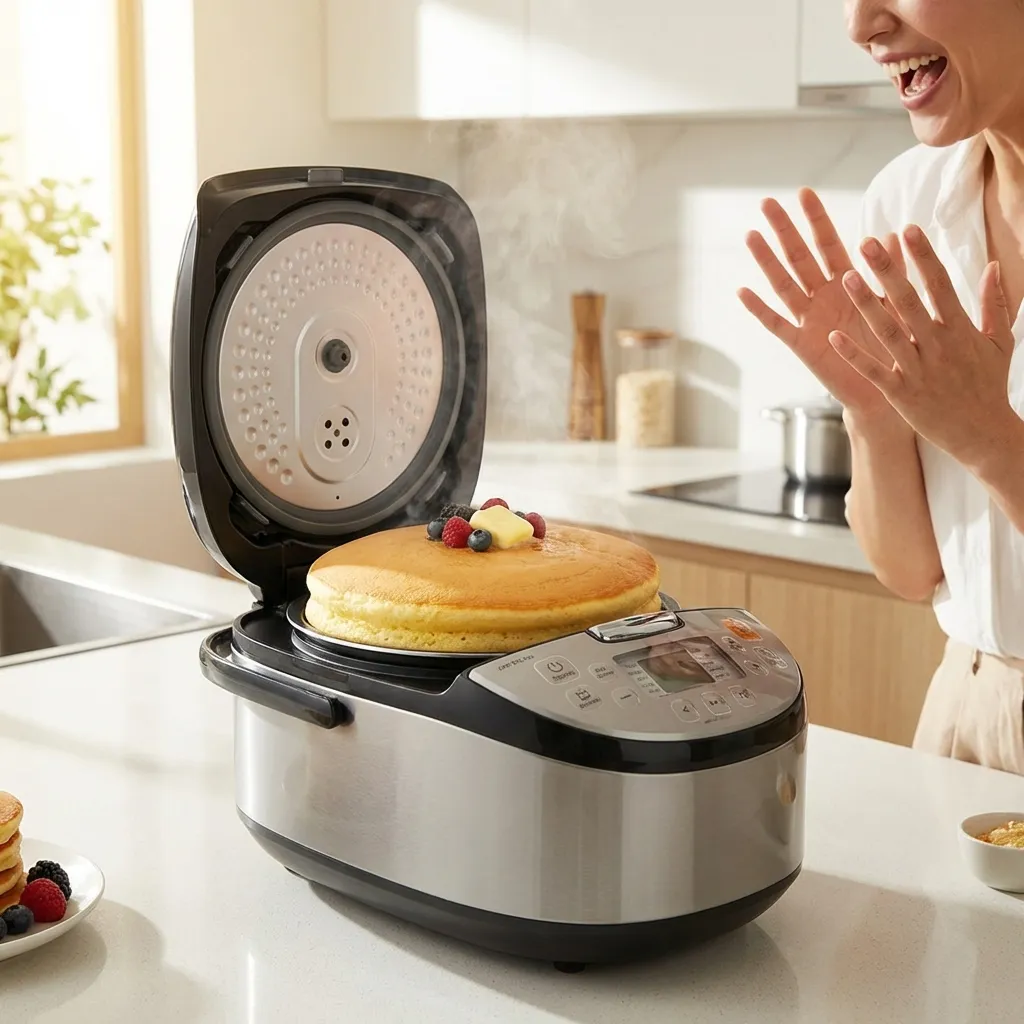
"Your rice cooker is the unsung hero of the kitchen. It's not just for Jasmine rice—it's a one-pot wonder machine waiting to be unleashed. Here are the unconventional ways Singaporean home cooks put this humble appliance to work."
Rice Cooker Superpowers
- 1 Takikomi gohan (mixed rice) cooks complete meals with zero monitoring
- 2 The 'Keep Warm' function is secretly a slow cooker and proofing oven
- 3 Steaming eggs alongside rice produces perfectly consistent results
- 4 Porridge, steamed cakes, and braised dishes all work beautifully
- 5 Know your cooker's limits: no deep frying, no high-heat searing
The 'Takikomi Gohan' Effect (Mixed Rice)
This Japanese-inspired technique is perhaps the most practical rice cooker hack: cooking your entire meal with the rice. The flavours steam into the grains, creating a fragrant, satisfying one-pot dish that requires zero monitoring.
The basic formula is simple: arrange ingredients on top of raw rice (with the appropriate water level), add seasonings to the water, and press cook. As the rice cooks, the toppings steam and their juices permeate the rice below.
Classic Combinations:
- Sliced lap cheong (Chinese sausage) + shiitake mushrooms + a splash of soy sauce
- Cubed pumpkin + dried shrimp + chicken stock instead of water
- Chicken thighs + ginger slices + sesame oil (remove bones before serving)
- Diced char siu + green onions + oyster sauce
"Every Sunday, I make claypot-style rice without the claypot," shares Uncle Lim. "Lap cheong, mushrooms, and a bit of dark soy. The rice on the bottom gets crispy, just like claypot. My secret? I leave it on 'warm' for an extra 15 minutes after cooking."
The Technique:
1. Wash and drain rice as usual
2. Add water (slightly less than usual—toppings release moisture)
3. Add liquid seasonings to the water
4. Arrange toppings on the surface (don't mix in)
5. Cook normally
6. Let rest for 10 minutes before mixing and serving
Cut ingredients into uniform sizes so they cook evenly. Delicate items like leafy greens should be added in the last 5-10 minutes.
For that coveted crispy bottom (like claypot rice), add a tablespoon of oil to the pot before rice, and leave it on 'keep warm' for 15-20 minutes after cooking.
Perfect Eggs: Hard, Soft, and Steamed
Steaming eggs in the rice cooker—either alongside rice or on their own—produces remarkably consistent results. No more guessing, no more cracked shells from boiling, no more green-grey yolks from overcooking.
While Cooking Rice:
Place eggs (in shells) in the steamer basket that came with your rice cooker, or wrap in foil and nestle on top of the rice. The eggs steam as the rice cooks. Result: perfectly hard-boiled eggs, every time.
Stand-Alone Eggs:
For more control, cook eggs without rice:
- Add 1 cup water to the pot
- Place eggs in the steamer basket
- Cover and cook
- Timing: 8-10 minutes for hard-boiled, 5-7 minutes for soft-boiled (varies by cooker)
- Immediately transfer to ice water to stop cooking
"I used to dread making soft-boiled eggs for kaya toast," admits home cook David. "Too runny, too hard, never right. Now I use the rice cooker timer function. Set it for exactly 6 minutes in my cooker, and it's perfect every time."
Steamed Egg (Chawanmushi Style):
Beat 3 eggs with 1.5 cups warm dashi or chicken stock. Strain into a heat-proof bowl. Cover with foil. Steam in the rice cooker with 2 cups water for 15-20 minutes. Result: silky, custardy steamed egg.
Room temperature eggs crack less when exposed to steam than cold eggs. Take them out of the fridge 30 minutes before cooking.
For that kopitiam-style soft-boiled egg, add eggs to the rice cooker on 'keep warm' mode (not cooking) for 10-12 minutes. The gentle heat produces perfectly runny yolks.
Keep Warm for Proofing Dough
If you bake bread at home, you know the struggle: Singapore's air-conditioned rooms often inhibit yeast activity. The 'Keep Warm' function creates a warm, slightly humid environment perfect for proofing dough, cutting rise time significantly.
The Technique:
1. Turn on 'Keep Warm' for 3-5 minutes to warm the pot
2. Turn off the cooker
3. Place covered dough (in a bowl or the pot itself) inside
4. Close the lid
5. The residual warmth accelerates proofing
"I live in a condo where the aircon runs 24/7," explains home baker Sarah. "My bread dough used to take 3 hours to rise. With the rice cooker trick, it's done in 90 minutes. Game changer for weeknight baking."
What You Can Proof:
- Bread dough (white, whole wheat, enriched)
- Pizza dough
- Chinese steamed bun (mantou) dough
- Cinnamon roll dough
- Any yeast-based dough
Temperature Tips:
Ideal proofing temperature is 25-30°C. Too hot kills yeast; too cold slows it. The rice cooker's 'Keep Warm' typically runs around 65-70°C, which is too hot for direct contact. That's why you warm, then turn off—the residual ambient warmth is perfect.
Place a small cup of hot water in the cooker alongside the dough for added humidity, which helps develop a better crust.
Don't over-proof. Check dough after 45 minutes, then every 15 minutes. It should double in size, not triple.
Lazy Porridge (Congee)
The traditional method of making congee requires hours of stovetop simmering with frequent stirring to prevent sticking. The rice cooker method is decidedly lazier—and produces results nearly as good with zero monitoring.
Basic Method:
Combine rice and liquid (water, stock, or a mixture) at a 1:7 or 1:8 ratio for thick congee, 1:10 for thinner versions. Add a tablespoon of oil (prevents sticking). Press 'Cook'. If your cooker has a 'Porridge' setting, use it—it maintains a gentle simmer that prevents boiling over.
"Leftover rice makes the fastest congee," shares Auntie Mei. "Already half-broken down. Add water or stock at 1:4 ratio, hit cook, and it's ready in 30 minutes."
Flavour Variations:
- Add dried scallops and ginger for superior broth
- Stir in century egg and salted egg at the end
- Top with you tiao (fried dough), spring onions, and white pepper
- Add raw fish slices just before serving (they cook in the residual heat)
Timing Guidelines (varies by cooker):
- From raw rice: 1.5-2 hours
- From leftover rice: 30-45 minutes
- Overnight slow cook: Set up before bed, ready for breakfast
For silkier texture, blend half the rice before cooking. The starch thickens the congee while the unblended rice provides texture.
Many rice cookers have a timer function. Set it up the night before with raw rice and water; wake up to fresh congee.
Steamed Cakes and Kueh
Steamed cakes are a Singaporean teatime tradition, and your rice cooker handles them beautifully. Ma Lai Go (Cantonese steamed cake), Kueh (various types), and simple sponge cakes all emerge fluffy and moist.
Ma Lai Go (Basic Recipe):
- 1 cup flour
- 1/2 cup brown sugar
- 1/4 cup oil
- 2 eggs
- 1 teaspoon baking powder
- 1/2 cup warm milk
- 1 tablespoon custard powder (optional, for colour)
Whisk wet ingredients, fold in dry. Pour into greased pot. Cook one cycle. Check doneness; repeat if needed.
"My grandmother's recipe for steamed cake was for a bamboo steamer," recalls home cook Rachel. "When she passed, I thought I'd lost the recipe because I didn't have her setup. Then I tried the rice cooker—it works just as well. She would have laughed."
Kueh Tips:
- Use the steamer basket for small kueh in moulds
- Line with parchment for easy removal
- Add water to the pot, place kueh above
- Check water level periodically for long steaming
Different cakes have different steam requirements. Dense batters need longer cooking—don't be alarmed if it takes 3-4 cycles.
For a crispy top on ma lai go, broil in the oven for 2-3 minutes after rice cooker cooking.
Braised Dishes: Set and Forget
Any dish that requires gentle, prolonged simmering works wonderfully in a rice cooker. Braised pork belly, soy sauce chicken, and herbal soups all benefit from the even, sustained heat.
Tau Yu Bak (Braised Pork Belly):
Brown pork belly and hard-boiled eggs in a pan first (optional but recommended). Transfer to rice cooker with dark soy, light soy, rock sugar, star anise, cinnamon, garlic, and water to cover. Cook one cycle, then 'Keep Warm' for 2-3 hours. The longer it sits, the better.
"I start my braised pork in the morning," shares home cook Linda. "Let it cook one round, then leave it on 'warm' all day. By dinner time, the pork is falling apart and the eggs are completely stained through."
More Braising Ideas:
- Soy sauce chicken: Whole chicken in master stock, cook one cycle, rest in liquid
- Chinese herbal soup: Pork ribs with herbs, extended 'keep warm' cycle
- Korean braised beef: Soy, pear, garlic, and slow cook
- Japanese nikujaga: Potato and meat stew
The Science:
The rice cooker's 'Keep Warm' maintains a steady 65-70°C—perfect for breaking down collagen in tough cuts without drying them out. It's essentially a low-tech slow cooker.
For best results, sear or brown meats before adding to the rice cooker. This step isn't possible in the cooker itself.
Make stock from braising liquid. Strain, cool, skim fat, and freeze. It becomes a flavour-packed base for future dishes.
Infused Oils and Rendered Fats
The gentle, steady heat of the 'Keep Warm' setting makes the rice cooker ideal for infusing oils or rendering fats—tasks that require low temperatures sustained over time.
Garlic-Infused Oil:
Combine 1 cup vegetable oil with 1 head of peeled, sliced garlic in the rice cooker pot. Set to 'Keep Warm' for 2-3 hours. The garlic will turn golden and crisp; the oil will be intensely fragrant. Strain and store.
Chicken Fat (Schmaltz):
Collect chicken skin and fat trimmings in the freezer until you have a cup or so. Add to rice cooker with a splash of water. 'Keep Warm' for 3-4 hours. Strain. The golden liquid is pure flavoured fat—incredible for frying rice or making roasted potatoes.
"I used to throw away chicken skin," admits home cook Jason. "Now I save it all, render it in the rice cooker, and use the fat for my Hainanese chicken rice. The rice tastes completely different—like the good chicken rice shops."
Other Applications:
- Herb-infused oils (rosemary, thyme)
- Pork lard from belly trimmings
- Duck fat from roast duck trimmings
- Chilli oil (dried chillies in vegetable oil)
Keep infused oils in clean, dry glass jars in the refrigerator. Use within 2 weeks, or freeze for longer storage.
The crispy bits left after straining (garlic chips, pork crackling) are incredibly tasty. Save them for garnishing.
Yogurt, Tofu, and Fermented Foods
Fermentation requires sustained, moderate temperatures—exactly what the rice cooker's 'Keep Warm' function provides. With patience and the right technique, you can make homemade yogurt, soft tofu, and even natto.
Homemade Yogurt:
1. Heat 4 cups milk to 82°C (almost boiling) on the stove
2. Cool to 43°C (warm to touch)
3. Stir in 2 tablespoons plain yogurt with live cultures
4. Pour into a clean container
5. Place in rice cooker (empty pot, no water)
6. 'Keep Warm' with lid ajar for 8-12 hours
7. Refrigerate until set
"Store-bought yogurt is expensive and full of sugar," observes health-conscious cook Emily. "Making it at home costs a fraction and I control exactly what goes in. The rice cooker makes it foolproof."
Soft Tofu (Dou Hua):
1. Blend soaked soybeans with water, strain for soy milk
2. Heat soy milk to 85°C
3. Add coagulant (gypsum or nigari) dissolved in water
4. Pour into container in rice cooker
5. 'Keep Warm' for 15-20 minutes
6. Let rest until set
The 'Keep Warm' function runs at different temperatures in different cookers. Use a thermometer to check yours before fermentation projects.
For yogurt, wrapping the container in a towel helps maintain consistent temperature throughout the long fermentation.
The Limits: What Not to Try
The rice cooker is versatile, but it's not magic. Some cooking tasks are beyond its capabilities, and attempting them leads to frustration or disaster.
Don't Attempt:
- Deep frying (can't maintain safe, consistent high temperatures)
- High-heat searing (can't get hot enough for proper Maillard reaction)
- Anything that requires precise temperature control above 100°C
- Pressure cooking (it's not a pressure cooker, despite appearances)
- Large quantities that exceed the pot capacity
Risky but Sometimes Works:
- Pasta (tends to stick; better to boil separately)
- Stir-fries (no wok hei possible)
- Anything requiring browning (add-ons like cheese or breadcrumb toppings)
"I once tried to make fried chicken in my rice cooker," confesses home cook Derek. "Don't do it. Just... don't. The oil was everywhere, the chicken was pale and sad, and I nearly damaged the cooker."
Know Your Cooker's Limits:
- Basic on/off cookers: Limited to rice, porridge, and steaming
- Fuzzy logic cookers: More versatile, better temperature control
- Multi-cookers (Instant Pot style): Can do almost everything, but that's a different category
When trying something new, start with a small batch in case it doesn't work. A failed experiment with a cup of ingredients is a learning experience; a failed experiment with a full pot is a disaster.
Keep notes on what works in your specific cooker. Model variations mean that advice from one user might not work for another.
Want to level up further?
Explore the full range of kitchen essentials to complement your rice cooker.
Kitchen Essentials Guide