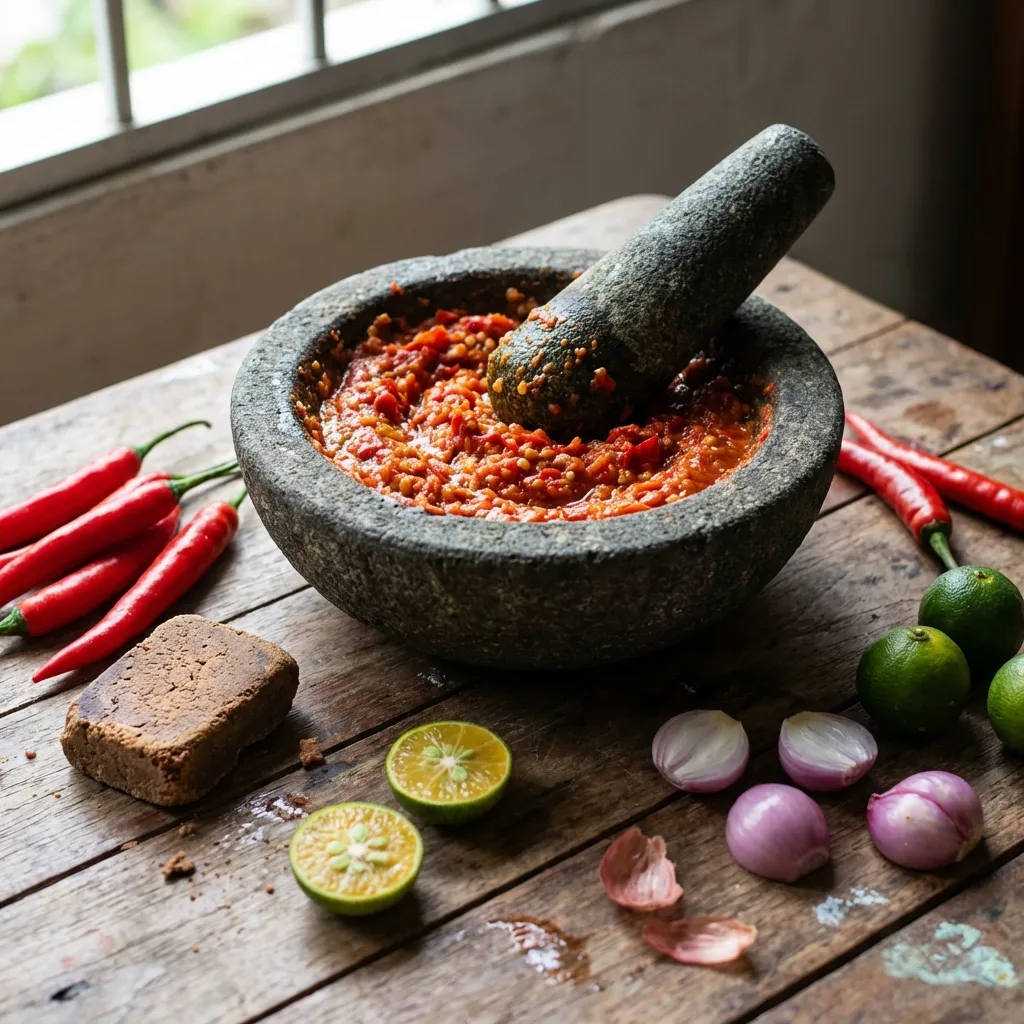
"Sambal is the lifeblood of Southeast Asian cuisine. But calling it 'chilli paste' is like calling wine 'grape juice.' Here is a guide to the many mothers and daughters of the sambal family, and how to make them yourself."
Sambal Essentials
- 1 Sambal belacan (raw) is the table condiment; sambal tumis (cooked) is the cooking base
- 2 Always toast belacan before using—raw belacan tastes harsh and fishy
- 3 'Pecah minyak' (oil separation) is the visual cue that cooked sambal is ready
- 4 Mortar and pestle creates better texture and releases more oils than blenders
- 5 Sambal keeps well—make large batches and freeze for convenience
Sambal Types Compared
| Sambal Type | Base | Heat Level | Best Use |
|---|---|---|---|
| Sambal Belacan | Fresh chilli + belacan | High | Table condiment, dipping |
| Sambal Tumis | Dried chilli + shallots | Medium | Cooking base, nasi lemak |
| Sambal Oelek | Fresh chilli + salt | High | Cooking ingredient |
| Sambal Belado | Fresh chilli + tomato | Medium-High | Nasi padang, eggs |
| Sambal Hijau | Green chilli + belacan | Medium | Grilled fish, seafood |
What Is Sambal, Really?
Walk into any Southeast Asian kitchen, and you'll find sambal. It might be sitting in a jar by the stove, ground fresh in a mortar each morning, or simmering in a pot to accompany the day's rice. But 'sambal' isn't a single thing—it's a family of chilli-based preparations as diverse as the region's cultures.
At its most basic, sambal is chillies processed with other ingredients to create a condiment or cooking base. The variations are endless: raw or cooked, fresh or fermented, wet or dry, mild or incendiary. Some are table condiments for dipping; others are cooking bases that form the foundation of entire dishes.
The common thread? Heat, of course. But beyond heat lies complexity—the funk of belacan, the sweetness of caramelised onions, the brightness of lime, the depth of tamarind. A good sambal doesn't just burn; it unfolds in layers of flavour that make you reach for more.
"In my mother's generation, every woman had her own sambal recipe," recalls Auntie Siti, 67. "You could tell whose cooking you were eating by the sambal. It was like a signature, better than any name."
This guide explores the major sambal types, their uses, and how to make them at home.
Sambal Belacan: The King
If you learn to make only one sambal, make this one. Sambal belacan is the quintessential table condiment—raw, pungent, and explosively flavourful. It transforms plain rice into a meal, elevates vegetables from boring to brilliant, and pairs with practically everything.
The traditional recipe is deceptively simple: fresh red chillies, toasted belacan (fermented shrimp paste), calamansi lime juice, and a little sugar. No cooking required—just pounding until combined. The result should be coarse, not smooth, with visible chilli seeds and a rough texture that clings to food.
The Ingredients:
- Fresh red chillies (bird's eye for heat, red finger chillies for milder versions)
- Belacan, toasted until crumbly and fragrant
- Calamansi lime juice (regular lime works, but tastes different)
- Sugar to balance
- Salt to taste
The Method:
Traditionally, you pound in a mortar and pestle—chillies first until broken down, then add toasted belacan and pound until combined but still coarse. Add lime juice and sugar at the end, adjust seasoning.
"The smell of belacan toasting is terrible," admits Auntie Siti. "My neighbours always know when I'm making sambal. But the taste is heaven. You must toast it properly—raw belacan is fishy and bitter. Toasted belacan is deep and savoury."
Toast belacan wrapped in foil over an open flame or in a dry pan until it crumbles easily and smells intensely fragrant (but not burnt). This step is non-negotiable.
Make more than you need. Sambal belacan keeps in the fridge for 1-2 weeks. The flavours meld and mature over time.
Sambal Tumis: The Queen
'Tumis' means to stir-fry, and sambal tumis is belacan's cooked cousin. This is the complex, sweet, slow-cooked sambal that accompanies nasi lemak, stuffs into sandwiches, and forms the base for countless Malay dishes. Making it properly takes time—but the result is transformative.
Unlike raw sambal belacan, sambal tumis uses dried chillies for colour and depth rather than fresh chillies for sharp heat. The dried chillies are soaked, blended with shallots and other aromatics, then slow-cooked in oil until the mixture darkens, sweetens, and the oil separates—the critical 'pecah minyak' stage.
The Ingredients:
- Dried red chillies (soaked and deseeded for less heat)
- Shallots (lots of them—they provide sweetness)
- Garlic
- Belacan (optional but recommended)
- Tamarind paste (asam)
- Sugar (palm sugar adds complexity)
- Salt
- Vegetable oil (generous amount)
The Method:
Blend soaked chillies with shallots, garlic, and belacan into a smooth paste. Fry in generous oil over medium-low heat, stirring frequently. The paste will spit and bubble. Cook for 20-30 minutes until dark red, fragrant, and you see oil pooling at the edges. Add tamarind water, sugar, and salt. Continue cooking until thick.
"Cannot rush sambal tumis," insists Mdm. Aminah, 70. "If you rush, the paste tastes raw, the onion tastes raw. You must cook until the colour changes, until the oil comes out. Only then is it ready."
The oil separating ('pecah minyak') is your visual cue that the rempah is properly cooked. Don't stop before this happens.
Make in large batches and freeze in portions. Sambal tumis freezes beautifully and forms the base for quick weeknight stir-fries.
Sambal Oelek: The Foundation
While Indonesians use 'oelek' broadly to mean pounded, in Singapore sambal oelek typically refers to the simplest possible sambal: just fresh chillies ground with salt and sometimes a touch of vinegar. It's bright, fresh, and serves as a building block rather than a finished condiment.
Think of sambal oelek as pure chilli potential. It's not meant to be eaten straight (though you could if you're brave). Instead, use it as a cooking ingredient—add to stir-fries, stir into soups, or as a base for other sauces. Its purity makes it versatile.
The Ingredients:
- Fresh red chillies
- Salt
- White vinegar (optional, for preservation)
The Method:
Deseed chillies for less heat if desired. Blend or pound with salt until coarse. Add vinegar if storing for longer than a few days.
"I always have sambal oelek in the fridge," shares home cook Rachel. "When I need heat, I add it to anything. Fried rice, instant noodles, even Western food. It's my emergency flavour booster."
Keep a jar of sambal oelek in the fridge door. It lasts 2-3 weeks and adds instant heat to any dish.
Roast your chillies briefly before processing for a deeper, smokier flavour. It changes the character significantly.
Sambal Belado: The Indonesian Influence
Singapore's food culture absorbs influences from across the region, and sambal belado showcases our Indonesian heritage. This is a cooked sambal, similar in technique to sambal tumis, but with a distinctly different flavour profile—brighter from tomatoes, more savoury from the emphasis on shallots.
Sambal belado is the classic accompaniment to Padang food (nasi padang). It's also exceptional with fried eggs, grilled fish, and tempeh. The tomato addition gives it a slightly more familiar flavour for those new to sambal.
The Ingredients:
- Fresh red chillies (generous amount)
- Shallots (2:1 ratio of shallots to chillies)
- Garlic
- Tomato (1-2)
- Lime juice
- Sugar and salt
- Oil for frying
The Method:
Slice chillies, shallots, garlic, and tomatoes. Fry shallots first until golden, add garlic, then chillies. Cook until chillies soften. Add tomatoes and cook until everything breaks down and oil separates. Season with lime, sugar, and salt.
"When I eat nasi padang, the sambal belado is the most important dish," explains Uncle Ahmad. "You can have average rendang, average chicken, but if the sambal is good, the meal is good. If the sambal is bad, nothing saves it."
Don't blend this sambal—the texture should be chunky, with visible pieces of chilli and shallot.
Add a handful of anchovies (ikan bilis) fried until crispy and tossed in at the end. This variation, sambal ikan bilis, is even more addictive.
The Secret Weapon: Belacan
You cannot make authentic sambal without understanding belacan—and you cannot understand belacan without confronting its smell. This fermented shrimp paste is pungent, funky, and arguably the most important ingredient in Malay and Peranakan cooking.
Belacan comes in blocks, ranging from pale pink to dark brown. Lighter colours indicate milder flavour; darker blocks are more intensely fermented. Neither is inherently better—they suit different applications.
Choosing Belacan:
Look for belacan that's firm but not rock-hard, with a consistent colour and no signs of mould. Good belacan smells strong but not rotten. The best varieties come from Penang or the East Coast of Malaysia.
Preparing Belacan:
Always toast before using. Raw belacan tastes fishy and harsh; toasted belacan tastes deeply savoury and complex. Methods:
- Wrap in foil and roast over open flame, turning frequently
- Dry-fry in a pan over medium heat, pressing and flipping
- Bury in rice embers (traditional method, incredible results)
The belacan is ready when it crumbles easily between your fingers and smells intensely fragrant—almost nutty, with deep umami notes.
"The first time I toasted belacan, my husband almost called the fire brigade," laughs Mrs. Lim. "The smoke alarm went off, the whole house smelled like a fishing village. But now I know: open windows, turn on the exhaust, and it's worth every minute."
Toast extra belacan and store in an airtight container. Pre-toasted belacan keeps indefinitely and saves time when making sambal.
If you absolutely cannot handle the toasting smell, buy pre-toasted belacan (belacan bakar) from specialty stores. It's slightly less fresh-tasting but completely acceptable.
Using the Mortar and Pestle (Batu Lesung)
Here's an uncomfortable truth: blenders cut the chilli, but stones crush it. The difference matters. Crushing releases oils that cutting doesn't, creating a sambal with deeper flavour, better texture, and more aromatic intensity.
The traditional granite mortar and pestle—batu lesung in Malay—has been the sambal-making tool for centuries. The rough granite surface grips ingredients, the heavy pestle provides crushing force, and the shape is optimised for circular grinding motions.
Why It's Worth the Effort:
- Crushing releases more volatile oils than cutting
- The friction creates heat that starts melding flavours
- Texture is superior—coarse but integrated, not chunky and separate
- The ritual itself is meditative and connects you to tradition
Technique:
Start with harder ingredients (chillies, garlic) and pound until broken down. Add softer ingredients (belacan, onions) and pound to combine. The motion is both up-down and circular—crushing then grinding. Don't lift the pestle too high; controlled force is more effective than violent smashing.
"My grandmother's batu lesung was the most important thing in her kitchen," remembers Auntie Siti. "When she passed, it went to my mother. When my mother passed, it came to me. Three generations of sambal have been made in that stone. It's seasoned with our family's flavour."
If using a blender is your only option, pulse rather than blend. Add minimal liquid and stop while the texture is still coarse.
New granite mortars need seasoning—grind raw rice repeatedly until the rice comes out clean (not grey). This smooths rough edges and removes stone dust.
Regional Variations Worth Knowing
Singapore's sambal landscape reflects our multicultural heritage. Beyond the core types, these regional variations add depth to your repertoire:
Sambal Hijau (Green Sambal):
Made with green chillies instead of red, this Malay/Minangkabau sambal has a different heat profile—sharp and bright rather than deep and warm. Excellent with grilled fish.
Sambal Terasi (Javanese Style):
Similar to sambal belacan but with the addition of palm sugar and a touch of tamarind. Slightly sweeter and more complex. The Indonesian influence shows.
Sambal Kangkung:
Not a standalone sambal but a dish: sambal tumis cooked with water spinach (kangkong). The vegetables absorb the sambal's flavour while contributing their own freshness.
Sambal Sotong:
Sambal tumis with squid added. The squid releases liquid that extends the sauce, creating something between a sambal and a curry. Classic Malay home cooking.
Sambal Petai:
Stink beans (petai) stir-fried in sambal tumis. The beans' pungent, slightly bitter flavour cuts through the sambal's richness. An acquired taste that becomes an addiction.
"Every family has their specialty sambal," notes food historian Dr. Tan. "Some are famous for their sambal tumis, others for their belacan blend. These recipes are heirlooms as precious as any jewellery."
Start with sambal belacan and sambal tumis. Once you've mastered these, the variations come naturally.
Keep a notebook of your sambal experiments. Adjust chilli quantities, belacan amounts, and sugar levels until you find your family's signature blend.
Troubleshooting Common Problems
Even experienced cooks encounter sambal issues. Here are the most common problems and their solutions:
Problem: Sambal is too hot
Solution: Add more sugar, lime juice, or coconut milk to temper. For sambal tumis, extend cooking time—heat mellows with prolonged cooking. For raw sambal, there's no fix—start over with fewer chillies.
Problem: Sambal tastes raw/harsh
Solution: For cooked sambal, you haven't reached pecah minyak. Continue cooking until oil separates. For raw sambal, the belacan wasn't properly toasted. Toast thoroughly next time.
Problem: Sambal is bitter
Solution: Bitter sambal usually means burnt belacan or overcooked dried chillies. Add sugar to mask, but prevention is better—watch your heat levels.
Problem: Sambal is too oily
Solution: The ratio of oil to paste was off. Drain excess oil (save it—it's delicious for cooking). Next time, use less oil or more paste.
Problem: Sambal doesn't keep
Solution: Sambal needs enough salt, sugar, and acidity to preserve. If it's spoiling quickly, increase these elements. Also ensure clean, dry utensils when scooping.
Problem: Colour is dull/brown instead of vibrant red
Solution: For raw sambal, use fresh, bright red chillies. For cooked sambal, burnt sugars cause browning—lower heat and stir more frequently.
Taste as you cook. Sambal is forgiving—you can almost always adjust seasoning to fix minor issues.
Keep a 'save-it' ingredient on hand: coconut cream. A splash can rescue overly hot, overly acidic, or overly harsh sambal by adding fat and sweetness.
Building Your Sambal Pantry
To make sambal whenever the mood strikes, stock these essentials:
Chillies:
- Fresh red finger chillies (medium heat, good colour)
- Fresh bird's eye chillies (high heat, small)
- Dried red chillies (for sambal tumis—stored in freezer)
Aromatics:
- Shallots (always have plenty)
- Garlic
- Fresh galangal (for some variations)
Fermented Elements:
- Belacan blocks (buy quality, toast yourself)
- Tamarind paste (asam jawa)
Acidics:
- Calamansi limes (if available) or regular limes
- White vinegar
Sweeteners:
- White sugar
- Palm sugar (gula melaka) for complex sweetness
Tools:
- Granite mortar and pestle (medium size, 8-10 inch)
- Blender (backup for large batches)
- Glass jars with tight lids (for storage)
"Start with the basics and build from there," advises Auntie Siti. "You don't need every ingredient on day one. Get your belacan, your chillies, your limes. Make sambal belacan until it's perfect. Then expand."
Fresh chillies freeze well—buy in bulk when prices are low and freeze for later.
Find an Asian grocery store that stocks good belacan. The quality difference between premium and budget belacan is enormous.
Sambal in Modern Cooking
While respecting tradition, there's room for innovation. Sambal's versatility means it crosses culinary boundaries with ease:
Sambal Mayo:
Mix sambal belacan into mayonnaise for a spicy dip. Perfect with fries, burgers, or as a sandwich spread.
Sambal Butter:
Blend soft butter with sambal tumis. Use on corn, toast, or melting over grilled meats.
Sambal Pasta:
Toss cooked pasta with sambal tumis, prawns, and a splash of pasta water. Southeast Asian aglio olio.
Sambal Eggs:
Scramble eggs with a tablespoon of sambal tumis stirred in. Top with crispy shallots.
Sambal Vinaigrette:
Whisk sambal belacan with rice vinegar and oil for a spicy salad dressing.
"My children live overseas," shares Mdm. Lim. "I send them jars of my sambal, and they put it on everything—pizza, avocado toast, even porridge. I laugh, but I'm proud. The sambal travels, the flavour stays."
The point isn't to replace tradition but to extend it. A grandmother who spent her life perfecting sambal tumis might raise an eyebrow at sambal butter—but she'd understand the impulse to share that flavour with every meal.
Introduce sambal gradually to non-Asian palates. Start with sambal mayo or sambal butter before moving to straight sambal belacan.
Package homemade sambal as gifts. A jar of your sambal tumis beats store-bought hot sauce any day.
Ready to use your sambal?
Sambal prawns is the perfect dish to showcase your homemade sambal.
10 Essential Dishes