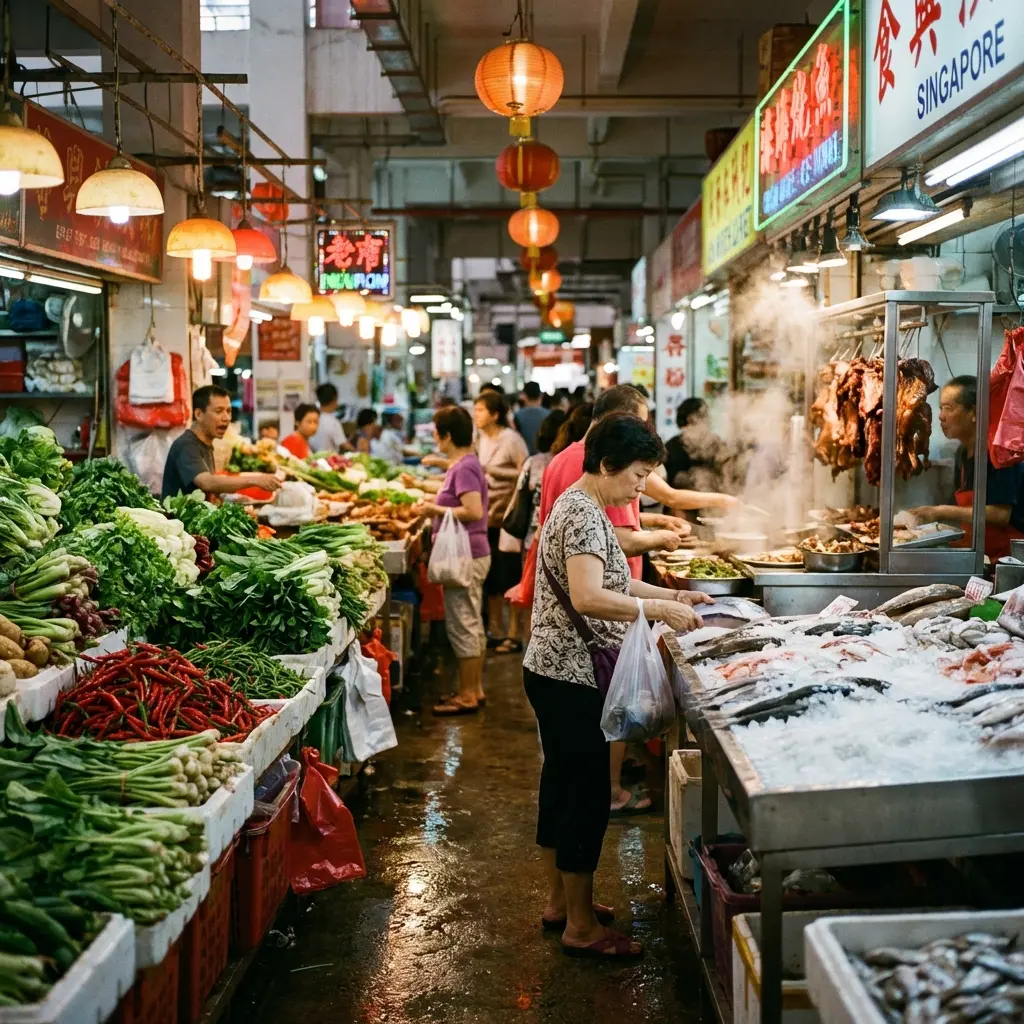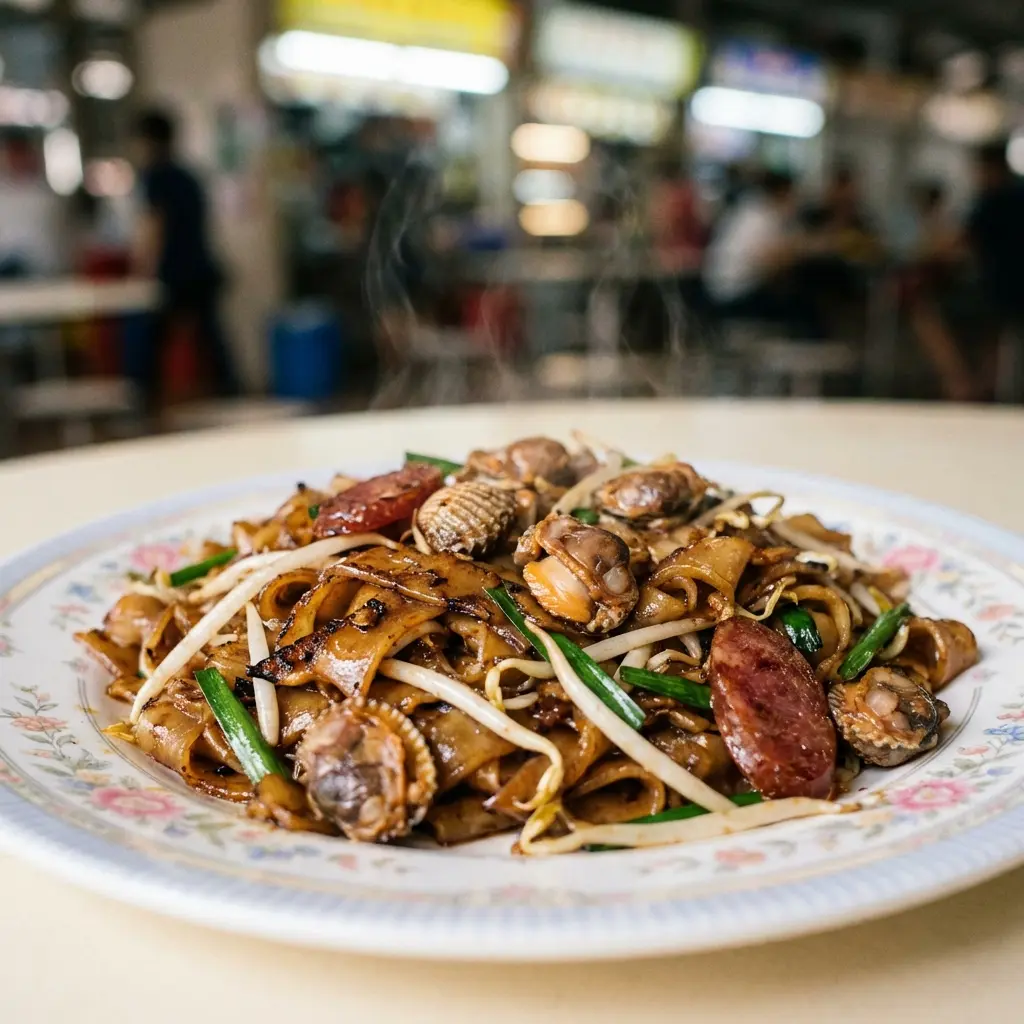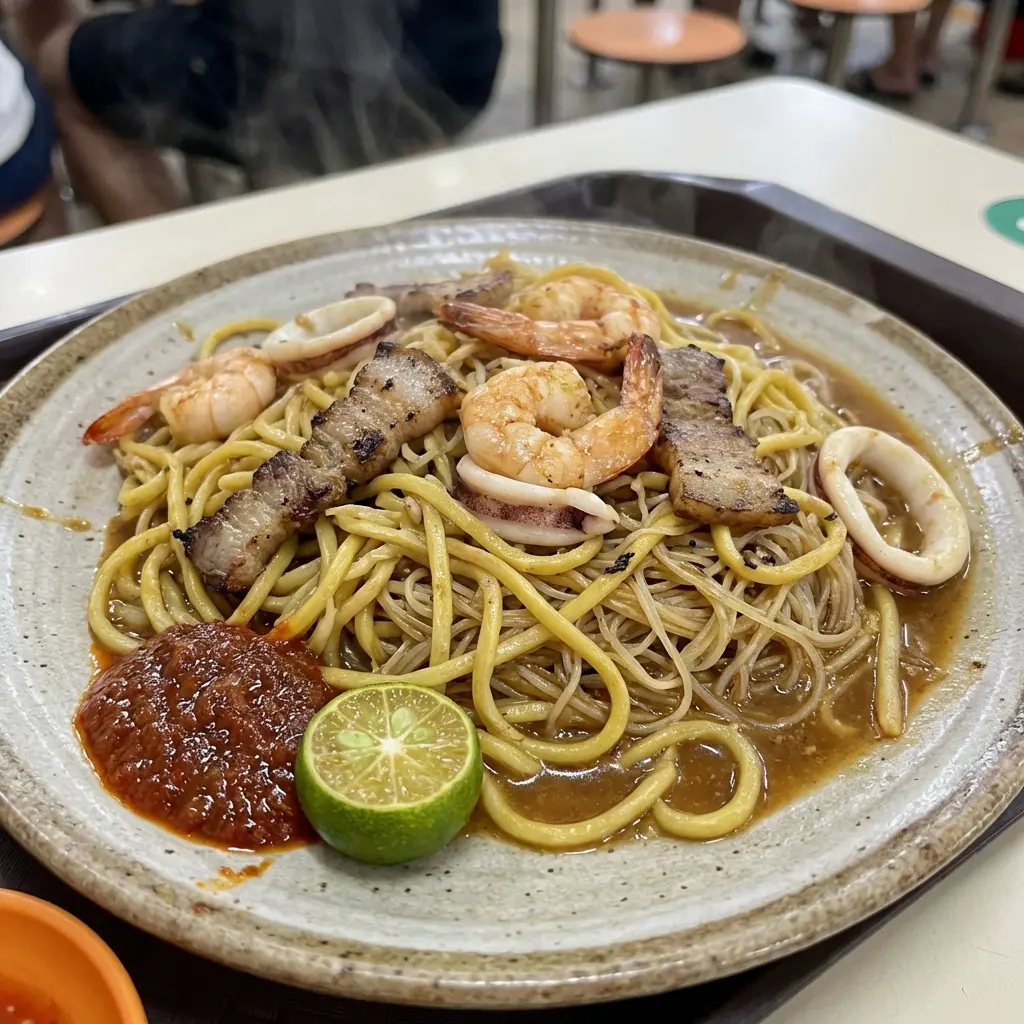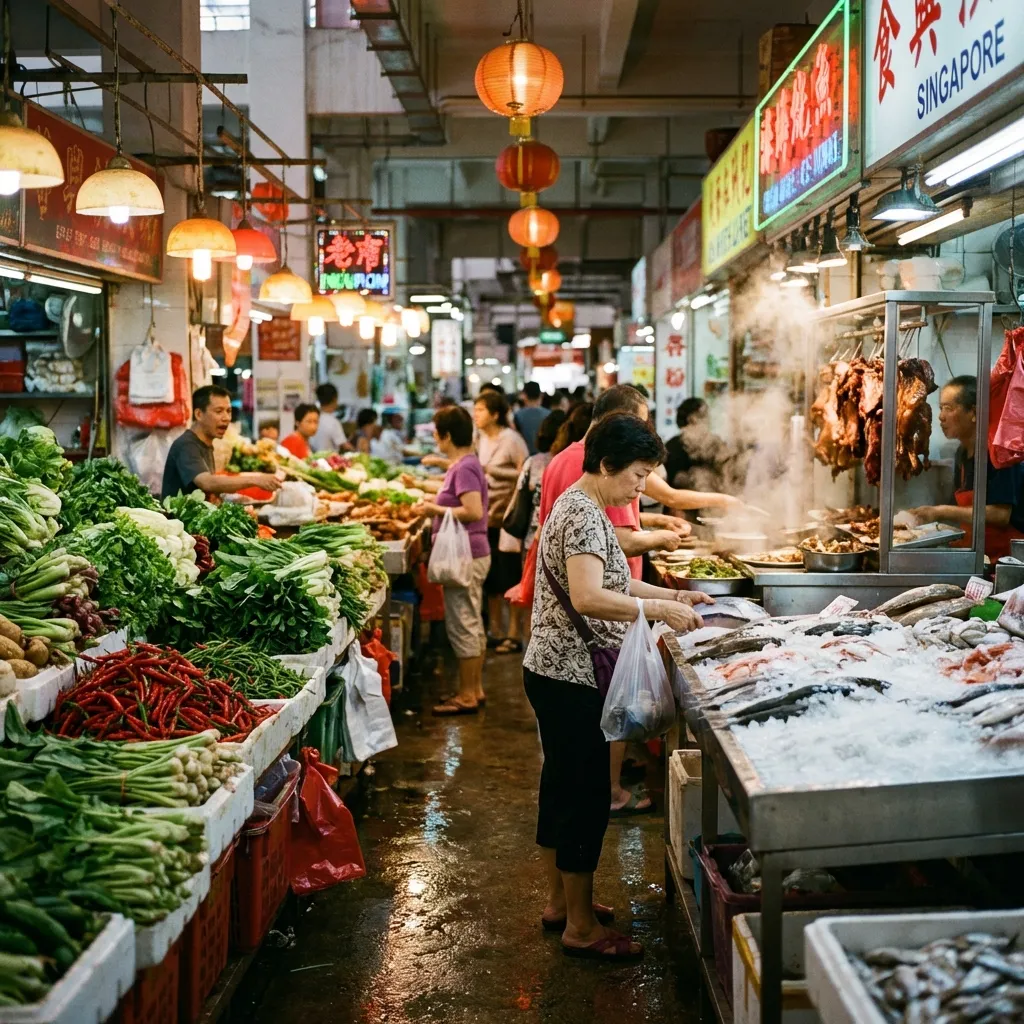
"Don't be intimidated by the shouting and the smells. The wet market is where you find the freshest ingredients and the best advice."
Wet Market Essentials
- 1 Arrive early (6-8am) for freshest seafood and best selection
- 2 Bring cash in small denominations—most stalls don't take cards
- 3 Build relationships with vendors—regulars get the good stuff
- 4 Fresh fish: clear eyes, red gills, firm flesh, ocean smell
- 5 Don't be afraid to ask for advice—vendors love sharing knowledge
Wet Market Essentials
Why the Wet Market Still Matters
In an age of air-conditioned supermarkets and same-day grocery delivery, the wet market might seem like an anachronism. But step into any of Singapore's wet markets on a weekend morning and you'll witness a thriving institution that refuses to fade.
"The wet market is where cooking begins—not with a recipe, but with a conversation. 'Uncle, today what's good?' That question has started a million delicious meals."
The wet market—named for its perpetually damp floors, kept wet for hygiene and to keep produce fresh—offers something no supermarket can match: expertise, selection, and the kind of personalised service that's been refined over generations.
Here, fishmongers know which fish arrived this morning and which has been sitting since yesterday. Butchers can recommend the exact cut for your grandmother's recipe. Vegetable sellers will tell you honestly when their kangkong isn't at its best.
This knowledge, freely shared, transforms grocery shopping from a transaction into an education. The wet market is where Singapore's culinary heritage lives—a classroom where anyone willing to listen can learn the secrets of cooking well.
Timing Your Visit: The Early Bird Strategy
The wet market operates on its own clock, and understanding its rhythms is essential for getting the best produce.
Between 5:00am and 6:00am, stalls are setting up and deliveries are arriving. Some seafood stalls are already operational, receiving the night's catch from fishing boats. This is when you'll find the absolute freshest fish, but selection is limited as stalls are still organizing.
The golden hours are 6:30am to 8:00am when all stalls are fully stocked. This is when serious cooks arrive—the restaurant buyers, the caterers, the aunties who've been shopping here for decades. If you want wild-caught pomfret, pristine prawns, or prime cuts of pork, this is your window.
"The aunties who arrive at 6:30am sharp aren't just early risers—they're professionals. Watch what they buy and how they inspect. You'll learn more in ten minutes than from any cookbook."
From 8:00am to 10:00am is still excellent for most purposes. The crowds thin slightly, making navigation easier. While most premium items are gone, plenty of good produce remains.
Building Relationships: The Currency of Trust
The wet market runs on relationships. Unlike supermarkets where anonymity is the norm, here your face becomes known, and that recognition translates into tangible benefits.
Start with respect by addressing stallholders as 'Uncle' or 'Auntie' regardless of their actual age. It's a mark of respect that signals you understand the culture, and a smile and genuine interest go further than you might expect.
Once you find vendors you trust, stick with them. Visit consistently, remember their faces, and ask how business is going. This loyalty will be repaid many times over. Regular customers get quiet upgrades: the fishmonger saves you the freshest catch, the butcher sets aside the cut you like, and the vegetable auntie throws in extra spring onions.
"My fish uncle knows I'm making teochew steamed fish before I even tell him. He just nods and picks the perfect pomfret. Thirty years of buying fish will do that."
When you ask 'Uncle, today what's good?', listen to the answer. Experienced vendors know their inventory better than anyone. If the fishmonger steers you away from the fish you wanted toward something else, trust that judgment—he's protecting his reputation by not selling you something subpar.
Understanding Wet Market Measurements
Pricing at the wet market follows traditional systems that can confuse first-timers. Understanding these prevents misunderstandings and ensures you're comparing prices accurately.
The kati (also spelled catty) is the most common unit, especially for meat and seafood. One kati equals approximately 604.79 grams or about 1.33 pounds. When a fishmonger quotes '$15 per kati,' remember you're getting slightly more than half a kilogram.
The tahil is one-sixteenth of a kati at approximately 37.8 grams. It's rarely used for bulk purchases but sometimes encountered when buying expensive items like dried seafood or specialty ingredients.
Kilograms are increasingly common, especially at stalls catering to younger customers. If in doubt, just ask: 'Uncle, this price per kati or per kilo?' No vendor will fault you for clarifying.
"Never be shy to ask about measurements. The uncle who laughs at your question today will respect your honesty tomorrow. Everyone started somewhere."
Some items are priced individually regardless of weight—tofu squares, bunches of vegetables, and whole fish below a certain size—so 'How much for one?' is always a valid question.
What to Wear and Bring
The wet market environment demands practical preparation. What you wear and carry significantly affects your experience.
The floor is wet—this isn't a figure of speech. Vendors spray water throughout the day to keep things clean and produce fresh. Wear closed-toe shoes with non-slip soles. Sandals are risky for slipping and unpleasant for wet feet.
Dress light and loose. Markets have minimal air conditioning (some have none), and the combination of crowds, tropical humidity, and proximity to ice melting around seafood creates a unique microclimate. Quick-dry fabrics are ideal.
Cash remains king as many stalls don't accept cards. Bring small denominations of $2, $5, and $10 notes. PayNow and NETS have made inroads, but don't rely on electronic payment exclusively—some vendors prefer cash and may offer subtle discounts for it.
Bring your own bags. A wheeled trolley is invaluable if you're buying heavy items like a large fish, a bag of rice, or watermelons. No one at the wet market will judge you for pulling a granny cart.
"Your shopping list is your anchor. Without it, you'll come home with three types of vegetables you didn't need and forget the eggs entirely. Ask me how I know."
The Full-Service Experience: What Vendors Do For You
One of the wet market's greatest advantages is the complimentary preparation services that vendors provide. These services, rarely available in supermarkets, transform raw ingredients into something ready for your wok.
At the fishmonger, services typically include scaling, gutting, filleting, slicing into steaks, and butterflying for grilling. Simply tell the vendor how you plan to cook the fish—'for steaming,' 'for curry,' or 'for frying'—and they'll prepare it accordingly.
At the butcher, pork can be sliced into strips for stir-fry, cubed for curry, minced for dumplings, or cut into chunks for soup. Tell them your dish—'for bak kut teh,' 'for char siu,' 'for ngoh hiang'—and they'll select and prepare the cut accordingly.
"I once watched a butcher transform a pork belly into perfect char siu strips in under a minute. That level of skill comes from doing the same thing ten thousand times. Why would I try to match it at home?"
For seafood, prawns can be deveined and shelled, crabs can be cleaned and quartered, and squid can be cleaned with tubes separated from tentacles and scored for quick cooking. These tasks are tedious at home but take vendors seconds.
The Freshness Checklist: Training Your Senses
Evaluating freshness is a skill that develops with practice. Your senses—sight, smell, touch—are more reliable than any date stamp.
For fish: eyes should be clear, bright, and slightly bulging rather than sunken or cloudy. Gills should be bright red or pink, not brown or grey. Flesh should spring back when pressed. The smell should be clean and sea-like, not fishy or ammonia-like.
For prawns and shrimp: shells should be translucent and firmly attached to flesh. The flesh should be firm, not mushy. Look for no black spots on shells, as these indicate decomposition.
For crabs: they should be alive and active—lethargic crabs are dying crabs. Check that all legs are present and moving. When you lift the crab, it should feel heavy for its size.
"A crab that doesn't fight back isn't worth fighting for. The feisty ones are the fresh ones."
For pork: colour should be pink to light red rather than grey or green-tinged. Fat should be white rather than yellow, which indicates age.
For vegetables: leaves should be perky and vibrantly coloured, not wilted or yellowing. Cut ends should look fresh rather than dried or brown.
Famous Wet Markets to Explore
Each wet market has its own character and specialties.
Tekka Market in Little India is Singapore's most diverse wet market, reflecting its multicultural neighbourhood. It's exceptional for Indian spices, mutton, and goat. The vegetable selection spans every cuisine. Upstairs houses an excellent hawker centre. It's busy, loud, and overwhelming in the best way.
"Tekka is sensory overload in the best possible way. The colours, the smells, the sounds—it's like traveling to three countries without leaving Singapore."
Tiong Bahru Market sits in the art deco heartland of Tiong Bahru, blending old-school charm with gentrified surroundings. It's known for quality produce and a slightly higher price point. The hawker centre upstairs features legendary chwee kueh.
Chinatown Complex hosts the largest hawker centre in Singapore, matched by an equally impressive wet market on the lower floors. Exceptional variety of Chinese ingredients, traditional preparations, and competitive prices—though it can feel overwhelming.
Geylang Serai Market is the heart of Malay cuisine. Essential during Ramadan for bazaar atmosphere, but worthwhile year-round for Malay ingredients, spices, and kueh. The best place to find ingredients for nasi lemak, rendang, and satay.
Ang Mo Kio Market is a well-organised neighbourhood market popular with families—clean, orderly, and less chaotic than central markets. Perfect for regular weekly shopping.
Seasonal Shopping: Timing Your Purchases
Like all food markets, wet markets reflect seasonal availability. Understanding these cycles helps you shop smarter and eat better.
During Chinese New Year in January and February, prices spike for festive ingredients including premium seafood, pork for bak kwa and roast meats, and specialty vegetables. Shop early or accept premium pricing. Markets close for several days during CNY itself.
During Hungry Ghost Month in August and September, demand for offerings and vegetarian items increases. Some consider it inauspicious to eat certain foods while others carry on as normal. Prices remain relatively stable.
"My grandmother always said: buy according to season, cook according to weather. Hot day? Light vegetables. Rainy day? Soup ingredients. The market will tell you what to eat if you listen."
Heavy rains and storms affect fishing and vegetable farming. After significant weather events, expect reduced supply and higher prices, particularly for leafy greens and seafood.
Fruit seasons bring their own rhythms. Durian's main season runs from June to August with a minor season from November to February. Mangosteen, rambutan, and langsat follow similar cycles. Local fruits are fresher and cheaper during peak season.