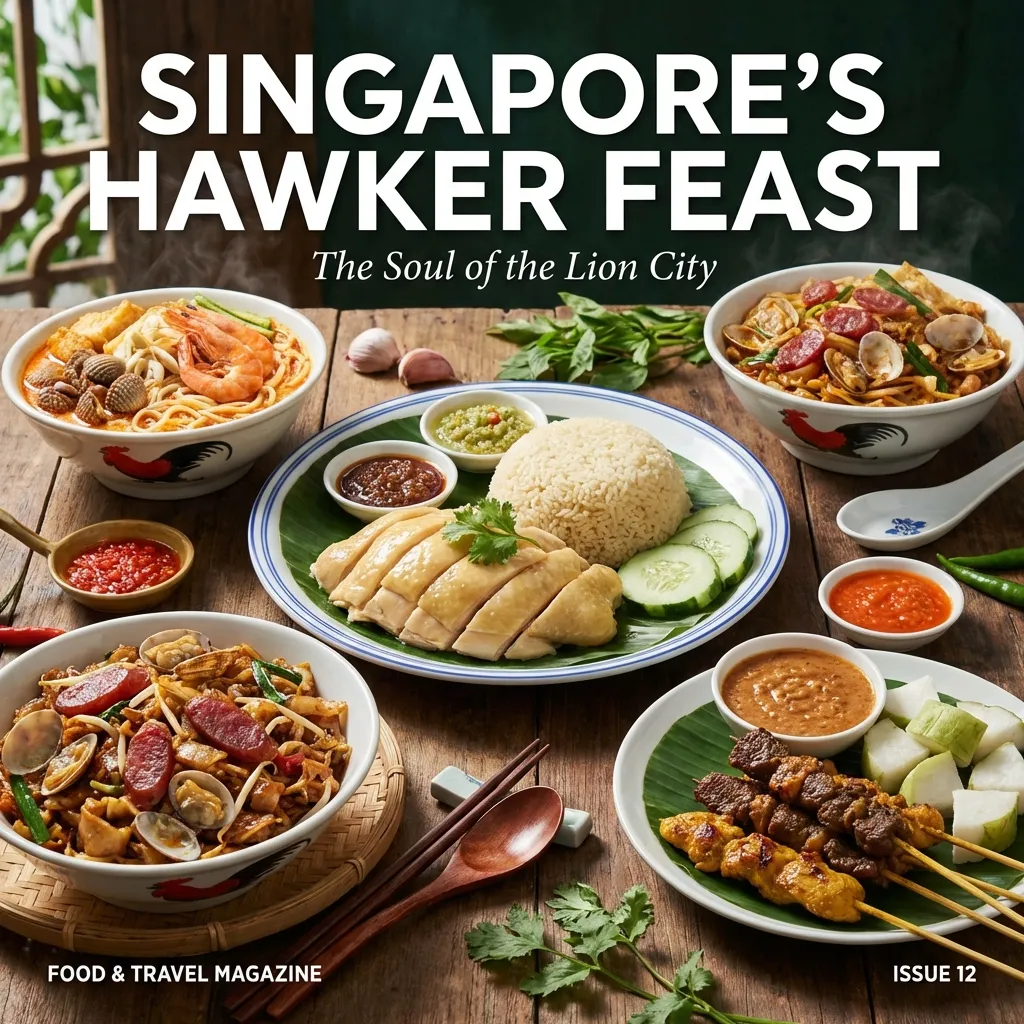
"It's the debate that could end friendships and divide families. We polled 500 locals from all walks of life to find out which hawker dishes hold the most special place in their hearts—and the results might surprise you."
The Definitive Top 10
- 1 Chicken Rice reigns supreme with nearly 30% of votes—no real surprise there
- 2 Char Kway Teow and Laksa battle for second place (wok hei vs. lemak)
- 3 Roti Prata is the only dish that works for breakfast, lunch, dinner, AND supper
- 4 Bak Chor Mee is uniquely Singaporean—you won't find it anywhere else
- 5 The Top 10 spans Chinese, Malay, and Indian influences—that's Singapore
How We Ranked These Dishes
Before we dive into the rankings, let's address the elephant in the room: how do you compare chicken rice to roti prata? It's like choosing between your children.
Our methodology was simple but rigorous. We surveyed 500 Singaporeans across all age groups, housing types, and ethnicities. We asked one question: "If you could only eat one hawker dish for the rest of your life, what would it be?"
The results were tallied, debates were had (some quite heated), and the final ranking emerged. Is it definitive? Of course not—that's the beauty of hawker culture. Your number one might be someone else's number ten. But these are the dishes that, statistically speaking, Singapore can't live without.
"When my overseas friends ask what to eat in Singapore, I always say: forget the restaurants. The real food is at the hawker centre," shares food blogger and survey participant James. "Every dish here tells a story."
💡 If you're new to hawker centres, start with the top 5. These are the crowd-pleasers that rarely disappoint, even at average stalls.
The rankings that follow are based purely on emotional attachment and frequency of craving—not price, not nutritional value, not Instagram-worthiness. This is about what Singaporeans actually eat when no one's watching.
#1. Chicken Rice (The Undisputed Champion)
Was there ever any doubt? Chicken rice didn't just top our poll—it dominated. Nearly 30% of respondents named it their desert-island dish, more than double the second-place finisher.
The magic of chicken rice lies in its deceptive simplicity. The chicken (roasted or poached) must be silky and flavourful. The rice—cooked in chicken fat and stock—must be fragrant and slightly oily. The holy trinity of chilli sauce, ginger paste, and dark soy must be present and balanced.
"Good chicken rice, the rice is the star," insists 72-year-old Mr. Tan, who's been eating it daily for decades. "Anyone can cook chicken. But that oily, garlic rice—that's where skill shows."
The debate between roasted (crispy skin) and steamed (silky, gently poached) chicken is eternal. Most stalls offer both. True devotees have strong opinions.
🎯 Order 'half roasted, half steamed' if the stall allows. Best of both worlds.
💡 The black sauce (dark soy with oyster sauce) is often overlooked. A good stall makes their own, slightly sweet and deeply savoury. Drizzle it over the chicken—don't dunk.
"When I'm overseas, chicken rice is what I miss first," admits survey respondent Sarah, 28. "You can find Chinese food anywhere in the world. But that specific Singaporean chicken rice taste? Impossible to replicate."
#2. Char Kway Teow (The Sinful Classic)
If chicken rice is comfort, char kway teow is indulgence. This stir-fried flat rice noodle dish, glossy with dark soy and pork lard, represents everything we know is bad for us—and everything we love anyway.
A proper char kway teow has 'wok hei'—that smoky, slightly charred flavour that only comes from a seasoned wok at screaming high heat. The flat noodles (kway teow) should be chewy but not clumpy, coated evenly in sauce, with bits of lup cheong (Chinese sausage), cockles, egg, and beansprouts throughout.
"The cockles must be fresh and barely cooked," insists hawker stall owner Mr. Goh. "Some people scared of cockles, ask me to leave out. I tell them, no cockles, not char kway teow. Just fried noodles."
💡 Specify 'with hum' (cockles) if you want them—some stalls ask. And if you're health-conscious, you can request 'less oil' or 'no lard', but purists will tell you that defeats the purpose.
The calories are substantial. The cholesterol is terrifying. The satisfaction is unmatched.
🎯 Eat char kway teow the moment it's served. This dish dies quickly—the noodles clump, the egg becomes rubbery, and the wok hei fades. Don't Instagram first; eat first.
"My doctor says no more char kway teow," laughs Mr. Lim, 65. "I tell him, at my age, I eat what makes me happy. CKT makes me happy."
#3. Laksa (The Spicy Soul Warmer)
Laksa is Singapore's answer to a hug in a bowl. The rich, spicy coconut milk broth—swimming with thick bee hoon or yellow noodles, topped with cockles, prawns, tau pok (fried tofu puffs), and often a slice of fish cake—is the dish we crave when we're sick, sad, or just really hungry.
The great laksa debate: Katong-style or traditional? Katong laksa cuts the noodles short so you can eat it with just a spoon—controversial but practical. Traditional laksa serves noodles long, requiring chopsticks and slurping skills.
"Katong laksa is tourist laksa," declares Mdm. Chen, a laksa purist. "Real laksa, you must slurp. The sound is part of the experience."
The lemak (coconut cream) should be thick but not cloying. The spice should build slowly—a gentle heat that warms from within. The dried shrimp (hae bee) in the paste should be detectable but not overpowering.
💡 If your laksa isn't spicy enough, add chilli. But if the broth is too thin or too sweet, no amount of condiments can save it. Choose your stall wisely.
🎯 Laksa is best eaten mid-morning or late afternoon—avoid peak lunch hours when broths get diluted from high turnover. Slow periods mean the pot has been simmering properly.
"Good laksa, you can smell from the queue," observes survey respondent Aisha. "That coconut and dried shrimp smell—you know immediately if it's legit."
#4. Roti Prata (The Any-Time Favourite)
No other dish spans the clock like roti prata. Breakfast with eggs and teh? Perfect. Lunch with curry? Absolutely. Dinner as a snack? Why not. 3am after drinks? Essential.
The prata itself should be crispy on the outside, soft and layered within—the result of careful stretching and folding of ghee-enriched dough. The accompanying curry (usually fish or dhal) is non-negotiable, though some rebels dip in condensed milk or even use it as a wrap.
"My father was a prata man," shares third-generation prata maker Raj. "He teach me: the secret is in the resting. Dough must rest 6-8 hours. Rush, and the layers don't form."
💡 Watch the prata man work. A skilled prata maker is an artist—the dough spins, stretches to translucent thinness, and lands on the griddle in fluid motion. This is theatre.
Kosong (plain) is the purist's choice. Egg prata adds richness. Then come the variations: cheese, mushroom, banana, murtabak (meat-filled). Some stalls have gone wild with plaster (condensed milk + peanut butter) and tissue prata (cone-shaped, for Instagram).
🎯 The best prata is the one straight off the griddle. If you're offered something that's been sitting, politely ask for fresh. It only takes 2-3 minutes and the difference is everything.
"Prata is democratic," philosophises regular customer Mr. Tan. "Doesn't matter if you're minister or taxi driver—same queue, same prata, same satisfaction."
#5. Bak Chor Mee (The Local Anomaly)
Here's a dish that exists almost nowhere else in the world—and Singaporeans are fiercely protective of it. Bak chor mee (minced meat noodles) combines mee pok or mee kia with minced pork, liver, sliced pork, meatballs, and vinegar-spiked chilli sauce, often with a generous amount of pork lard.
The 'dry' version is quintessentially Singaporean: the noodles are tossed with sauce (vinegar, chilli, lard, soy) rather than served in soup. The result is tangy, spicy, savoury, and absolutely unique.
"My American friends try bak chor mee and cannot understand," laughs survey respondent Emily. "They say, 'Why so much vinegar?' I say, that's the whole point!"
The vinegar is essential—it cuts through the richness of the pork and lard, creating a bright, almost addictive flavour. The chilli should be the kind that builds heat without masking everything else.
💡 Specify your noodle type: mee pok (flat) for more sauce absorption, or mee kia (thin) for a more traditional texture. Both are correct.
🎯 Always order with 'everything'—don't skip the liver or the fish dumplings. The variety of textures (silky liver, bouncy meatball, slippery noodle) is what makes each bite interesting.
"Bak chor mee is Singapore's only real contribution to world cuisine," argues food historian Dr. Tan. "Everything else we borrowed and adapted. But BCM? That's ours."
#6. Hokkien Mee (The Smoky Noodle King)
Hokkien mee—the wet kind, not the Penang dry version—is a masterclass in wok hei. Yellow noodles and thick bee hoon are fried in a prawn stock that slowly reduces, becoming intensely savoury and slightly sticky. The dish arrives glistening, topped with squid, prawns, and pork belly, with a wedge of lime and sambal on the side.
The key to great Hokkien mee is the stock. Good stalls simmer prawn shells for hours, extracting every bit of sweetness and depth. This stock is what gets absorbed into the noodles during frying—and what separates the legends from the ordinary.
"See that orange-brown colour? That's the prawn stock," explains veteran hawker Mr. Tan. "Some people use shortcuts—prawn powder, colouring. You can taste the difference immediately."
💡 Squeeze the lime generously. The acidity lifts the rich, heavy noodles and enhances the seafood flavour.
🎯 Hokkien mee is best at stalls where the queue moves slowly. Why? Because the hawker isn't rushing—each plate gets proper wok time, proper stock absorption, proper char.
"Friday night Hokkien mee with beer—that's my therapy," admits banker Derek, 42. "Doesn't matter how bad the week was. That plate makes everything okay."
#7. Nasi Lemak (The Fragrant Foundation)
Some argue that nasi lemak is Malaysian. Let them argue—Singaporeans have claimed it, adapted it, and made it their own. The coconut rice, fragrant with pandan, is just the beginning. It's what you pile on top that matters.
The base package includes ikan bilis (crispy anchovies), roasted peanuts, cucumber slices, a fried egg, and sambal. From there, you build: fried chicken wing, otah, fried fish, luncheon meat, and dozens of other add-ons that transform a simple rice dish into a feast.
"Nasi lemak is breakfast, but also lunch, also supper," explains stall owner Mdm. Fatimah. "Some people come 6am before work. Some come 11pm after club. Same love."
The sambal is crucial—it should be sweet, spicy, and savoury in balance, with dried shrimp for depth. Wet and chunky is traditional; some stalls make it smooth and concentrated.
💡 The rice quality matters most. If it's dry or poorly cooked, no amount of add-ons will save it. Good nasi lemak rice should be moist, slightly sticky, and powerfully fragrant.
🎯 Go early. Nasi lemak sells out. Popular stalls are done by 9am, and the best fried chicken wings disappear first.
"My kids ask why we cannot just make nasi lemak at home," laughs survey respondent Mrs. Goh. "I tell them: the auntie's sambal is 30 years of experience. How to replicate?"
#8. Carrot Cake (Chai Tow Kway)
There are no carrots in carrot cake. Let's get that out of the way. This dish—steamed radish cake, diced and fried with eggs, garlic, and preserved radish (chai poh)—comes in two versions: black (sweet, with dark soy sauce) and white (savoury, without).
Both versions are correct. Both have passionate defenders. The black version is slightly caramelised and sweeter. The white version lets the radish cake and chai poh flavours shine through.
"I only eat white carrot cake," insists purist Mr. Koh. "Black one too sweet, cover up everything. White one, you can taste the wok hei, the egg, the crispy bits."
The textural contrast is everything: soft, almost creamy radish cake interior, crispy fried edges, chewy egg coating. The chai poh (preserved radish) adds a salty crunch that ties it all together.
💡 Specify 'more chai poh' if you like it—the preserved radish is often the best part.
🎯 Order 'crispy' if you want more fried bits and less soft cake. Some stalls will accommodate this preference; the extra wok time creates more crispy edges.
"Carrot cake is the ultimate comfort food," says survey respondent Rachel. "Nothing else hits the spot at 3am quite like a plate of black carrot cake."
#9. Prawn Mee (The Rich and Robust)
If you want to understand Southeast Asian flavour in a single bowl, order prawn mee. The soup—deep orange-red and intensely savoury—is built from prawn shells and heads roasted until fragrant, then simmered for hours with pork bones.
The result is a broth that tastes like the sea and the earth got together and made something magical. Yellow noodles, bee hoon, or both (if you're greedy) swim in this umami bomb, topped with prawns, sliced pork, kangkong, and fried shallots.
"The secret is the pork fat," reveals hawker veteran Mr. Wong. "You must roast the prawn shells in pork fat first. That's what give the colour, the depth. People think it's chilli—no, it's prawn fat and pork fat together."
💡 Add the chilli paste provided—it's specifically made to complement the soup, usually with dried shrimp incorporated.
🎯 Ask for 'extra soup' in a separate bowl. Good prawn mee broth is worth sipping on its own, and you can keep adding to your noodles as you eat.
"I crave prawn mee when I'm overseas," confesses expat James. "There's nothing like it anywhere else. Sometimes I dream about that soup."
#10. Wanton Mee (The Elegant Staple)
Wanton mee is hawker food dressed for dinner. Springy egg noodles, tossed with sauce and topped with char siew (barbecued pork), leafy greens, and silky wanton dumplings—either in the noodles or served separately in soup.
The balance is delicate. The noodles must be al dente—overcook them and the dish falls apart. The char siew should have caramelised edges and juicy meat. The wantons must be plump with prawn and pork filling, not stingy wrappers with a suggestion of meat.
"Good wanton mee, every element must be right," explains third-generation hawker Mr. Lee. "Bad noodle texture—fail. Dry char siew—fail. Tiny wanton—fail. All must be perfect together."
💡 Dry or soup? Dry version (tossed with sauce) showcases noodle texture; soup version is comforting and soothing. Both are valid life choices.
🎯 Pay attention to the char siew. Some stalls make their own (ideal); others buy commercial (fine but not special). House-made char siew, slightly charred and honey-glazed, elevates the entire dish.
"Wanton mee is my death row meal," declares survey respondent Michael. "If I could only eat one more thing, a good plate of wanton mee with extra char siew. Then I die happy."
Honourable Mentions
Every ranking leaves beloved dishes behind. These narrowly missed the top 10 but deserve recognition:
Satay - Charcoal-grilled meat skewers with peanut sauce. The night markets aren't the same without them.
Oyster Omelette (Or Luak) - Crispy on the edges, gooey in the middle, loaded with fresh oysters. A guilty pleasure.
Lor Mee - Thick, starchy gravy over noodles with braised meat. An acquired taste that inspires fierce loyalty.
Kway Chap - Flat rice noodles in a herbal soy broth with pig innards. Not for beginners, but beloved by those who get it.
Mee Rebus - Sweet potato gravy over yellow noodles. A Malay classic that deserves more attention.
Fish Head Curry - A whole fish head in spicy curry, scooped with crusty bread. Singapore's great adaptation of Indian cuisine.
"The beautiful thing about hawker food," reflects survey coordinator Mr. Tan, "is that everyone's list is different. You ask 500 people, you get 500 strong opinions. That's what makes us Singaporean."
💡 Don't just eat the popular dishes. Some of the best hawker experiences are the obscure stalls—the one uncle doing one thing brilliantly for 40 years.
🎯 Talk to the hawkers. Ask about their history, their recipes, their secrets. Most are proud of their craft and happy to share. You'll learn more about Singapore through food than any museum.